

Description
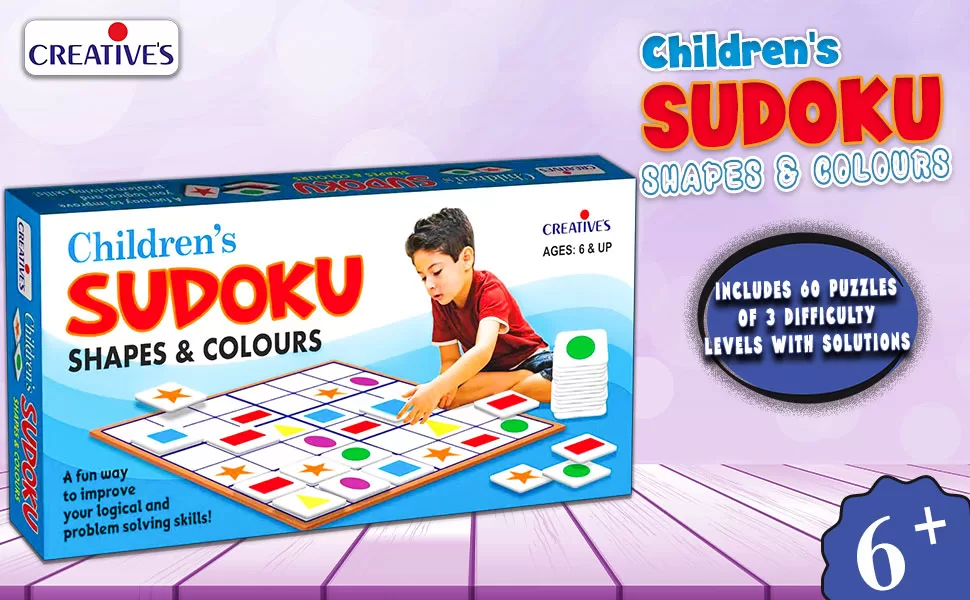
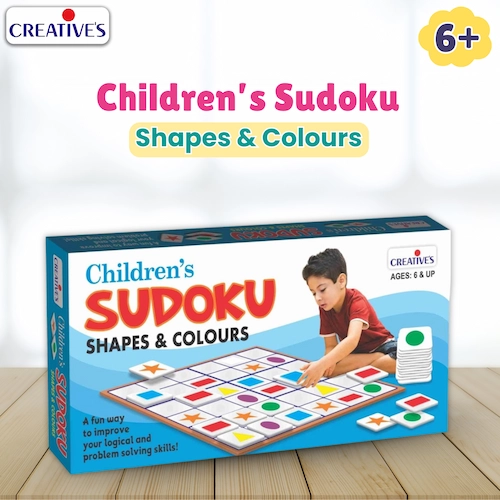
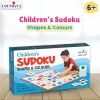
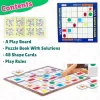
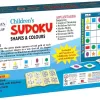
Creative’s Children’s Sudoku is a Shapes & Colours board game that
brings the logic of Sudoku within reach of children from age 6.
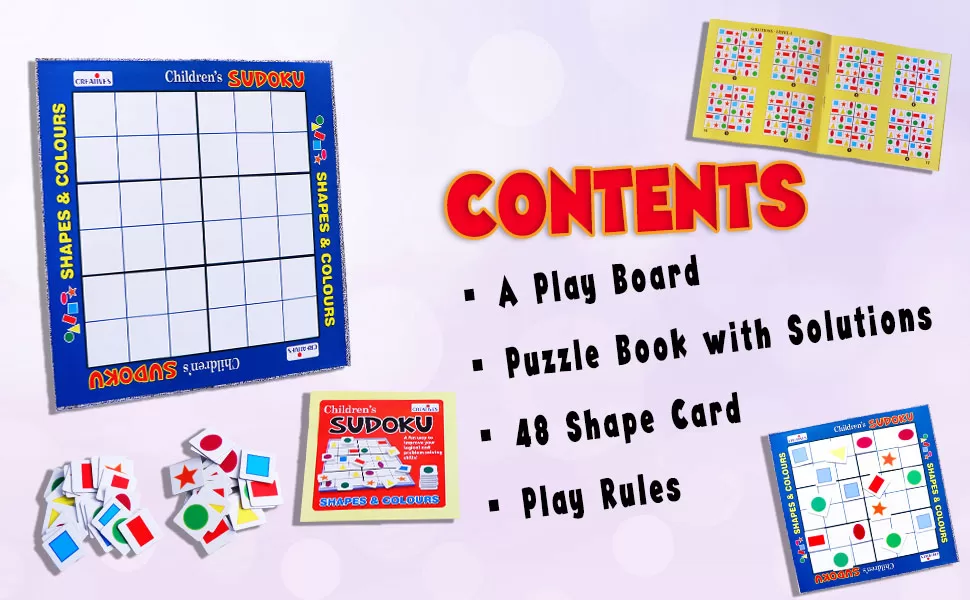
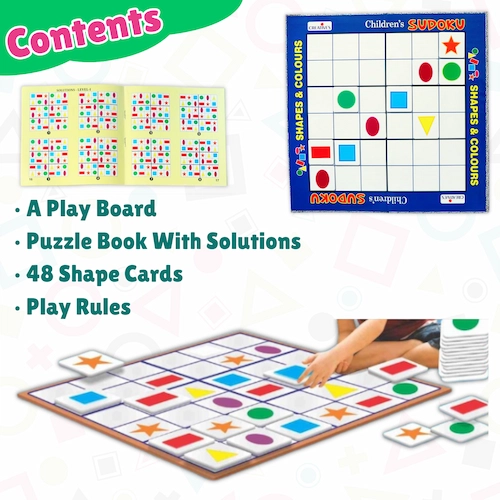
Using six distinctive shape-colour tiles — red rectangle, orange star,
yellow triangle, blue square, purple oval, green circle — children fill
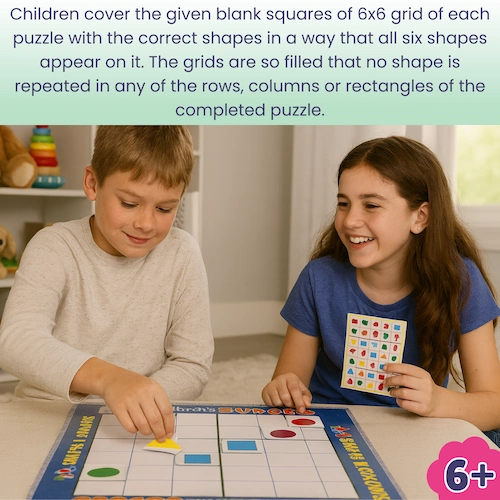
a 6×6 grid so that each shape appears exactly once in every row,
column, and 2×3 rectangle. A graded Puzzle Book provides 60 puzzles
across three difficulty levels, all with solutions.
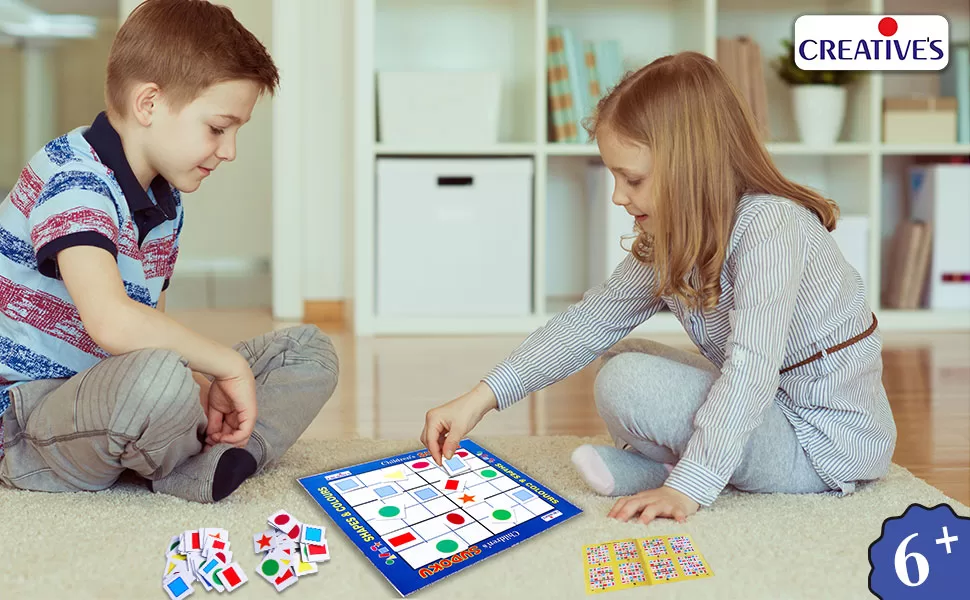
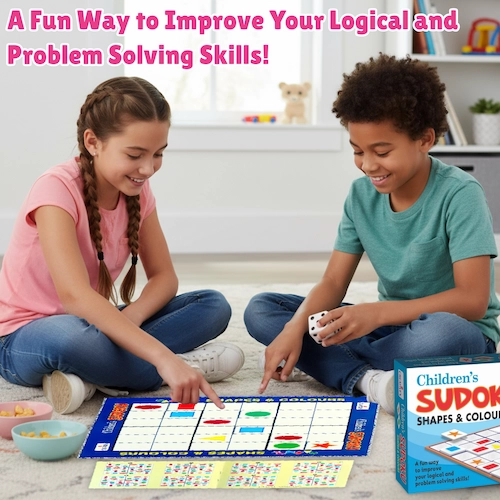
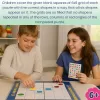
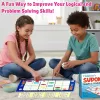
Children select a puzzle, study the partially filled grid, and place tiles
one by one using logical deduction. Each correct placement narrows
the options for the remaining squares; each mistake eventually creates
a contradiction that sends the child back to reconsider.
That iterative cycle of reasoning and self-correction is where logical
thinking, strategy, and concentration all develop.
Parents choose this game because it gives children a structured, rule-based
challenge that grows with them across three difficulty levels. Teachers reach
for it because the constraint-satisfaction logic of Sudoku maps directly onto
early mathematical reasoning and independent problem-solving skills.
HOW CHILDREN LEARN
- A child scans a partially filled grid and notices that the blue square
is missing from one row — that deductive step, “it must go here because
it can’t go anywhere else,” is logical thinking in its most direct form. - Working through the column constraint simultaneously with the row
constraint trains children to hold two rules in mind at once a genuine
working-memory challenge that standard matching games cannot replicate. - At Level 1 the starting grid has more tiles placed, giving children a
scaffolded entry point; at Level 3 fewer tiles are given, requiring a longer
chain of deductions and building stamina for complex problem-solving. - When a child places a tile incorrectly and later reaches a contradiction,
they must backtrack and re-examine their earlier decisions practising
the kind of flexible self-correction that underpins mathematical reasoning. - Completing a puzzle and checking it against the solution builds the
habit of verification — checking one’s own work is a foundational
academic skill that transfers directly to maths, science, and beyond.
SKILLS DEVELOPED
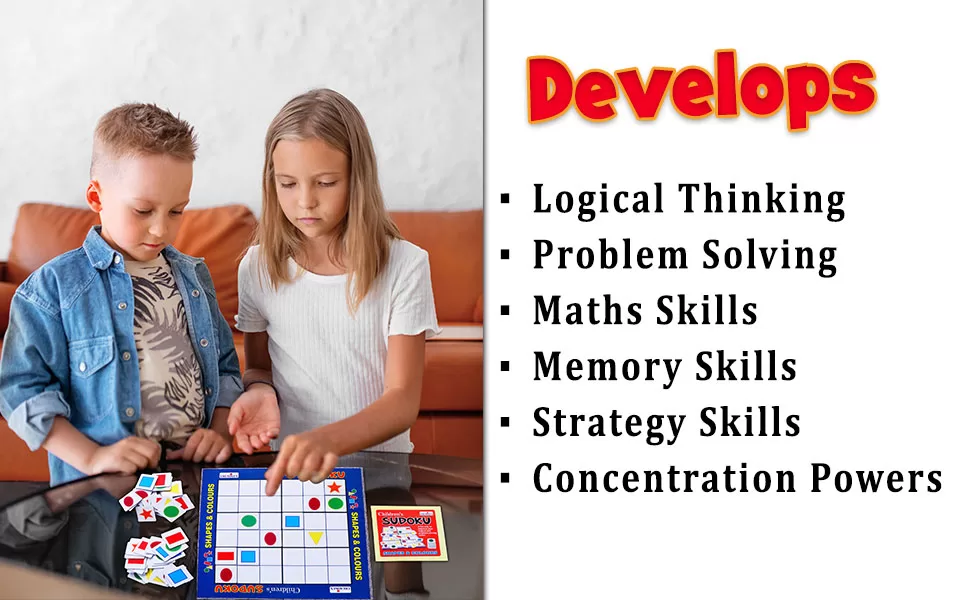
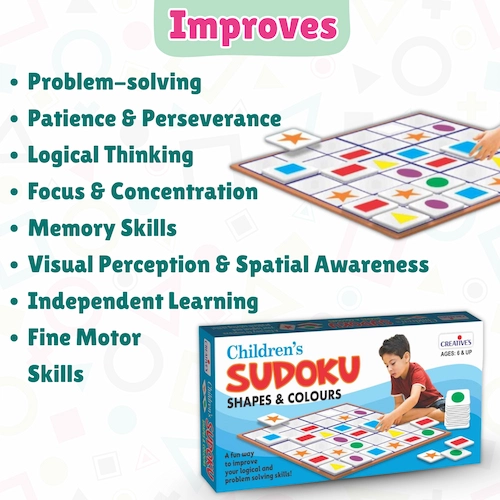
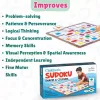
- Logical Thinking & Deductive Reasoning
- Problem Solving & Strategy
- Maths Skills (Pattern, Rules, Constraint Satisfaction)
- Concentration & Focus
- Memory Skills & Working Memory
- Visual Discrimination
- Spatial Reasoning
WHO IS IT FOR
- Children aged 6 to 10 who are ready for rule-based logical
challenges and want a structured alternative to screen-based puzzle games. - Parents looking for a genuinely stretching board game for a
6–8-year-old that builds maths-adjacent thinking skills without
feeling like schoolwork. - Primary school teachers who need an independent enrichment
activity for children who have grasped basic maths concepts and
are ready for logical reasoning challenges. - Homeschooling parents covering early logic, mathematical thinking,
pattern recognition, and constraint-based reasoning through
structured game play. - After-school programme facilitators who need a game that children
can work through independently at three different challenge levels. - Gift-givers looking for a board game for a 6+ child that will hold
attention across many sessions and offers a genuine sense of
achievement when a puzzle is solved.