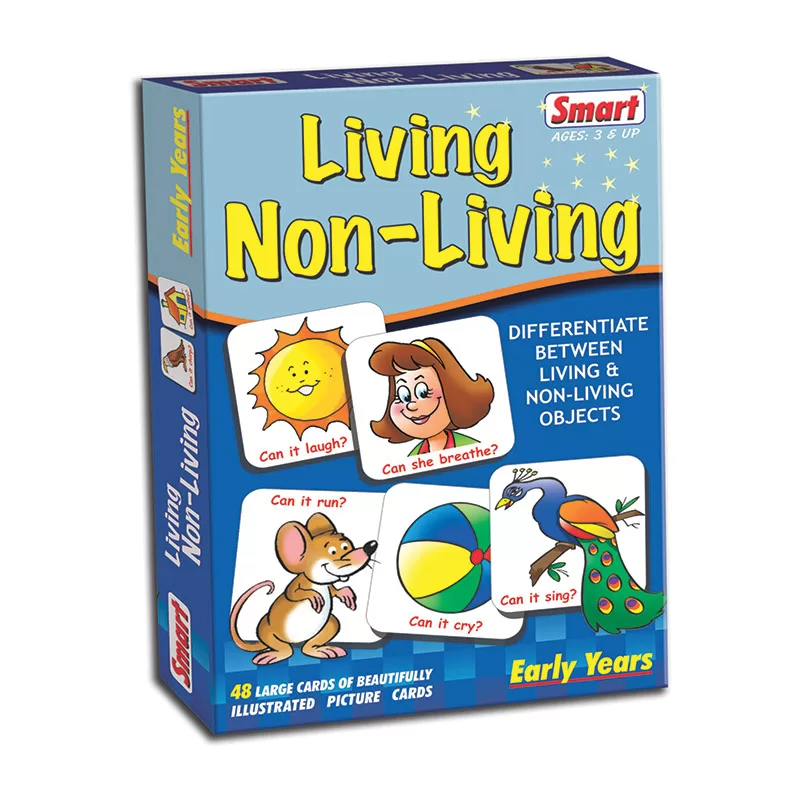
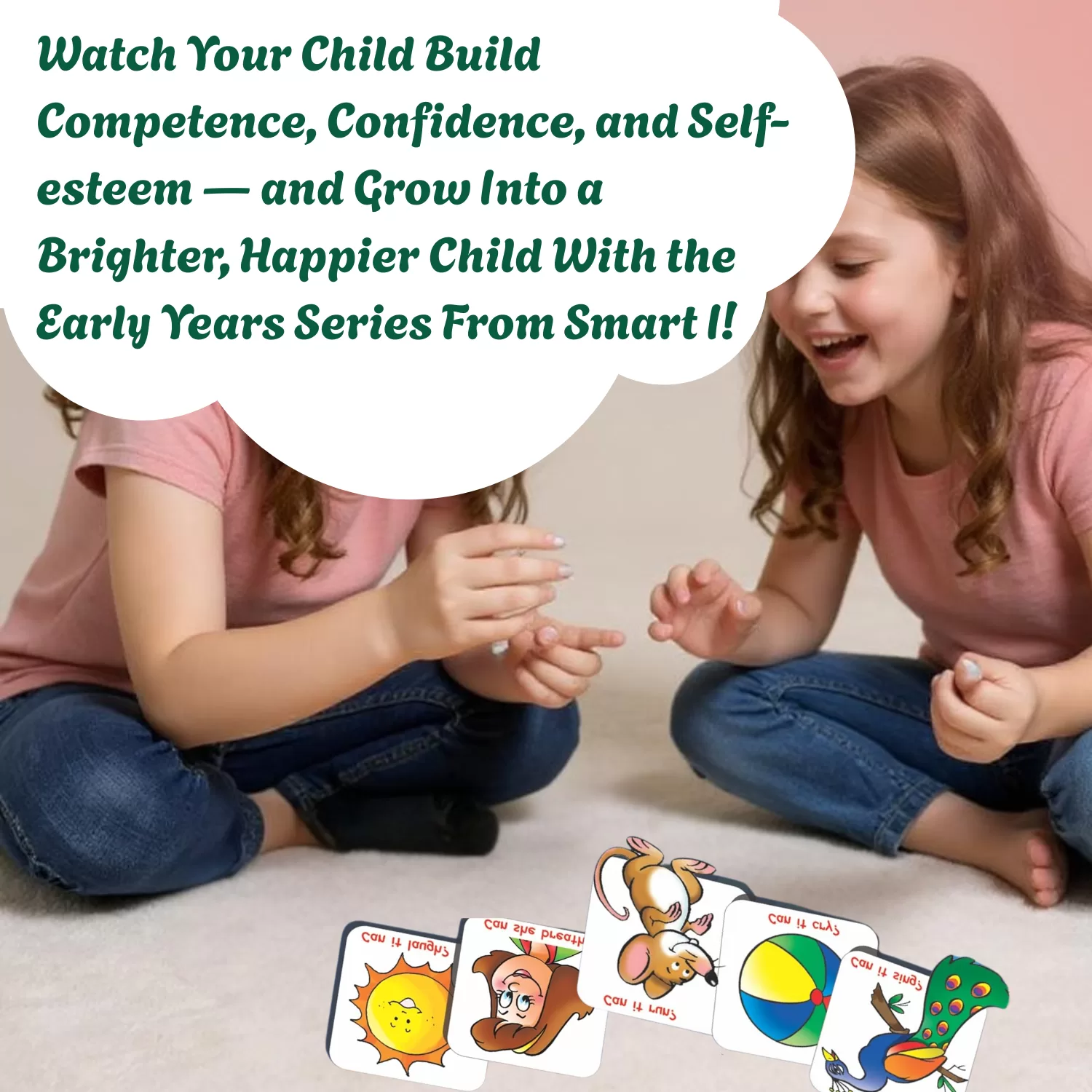
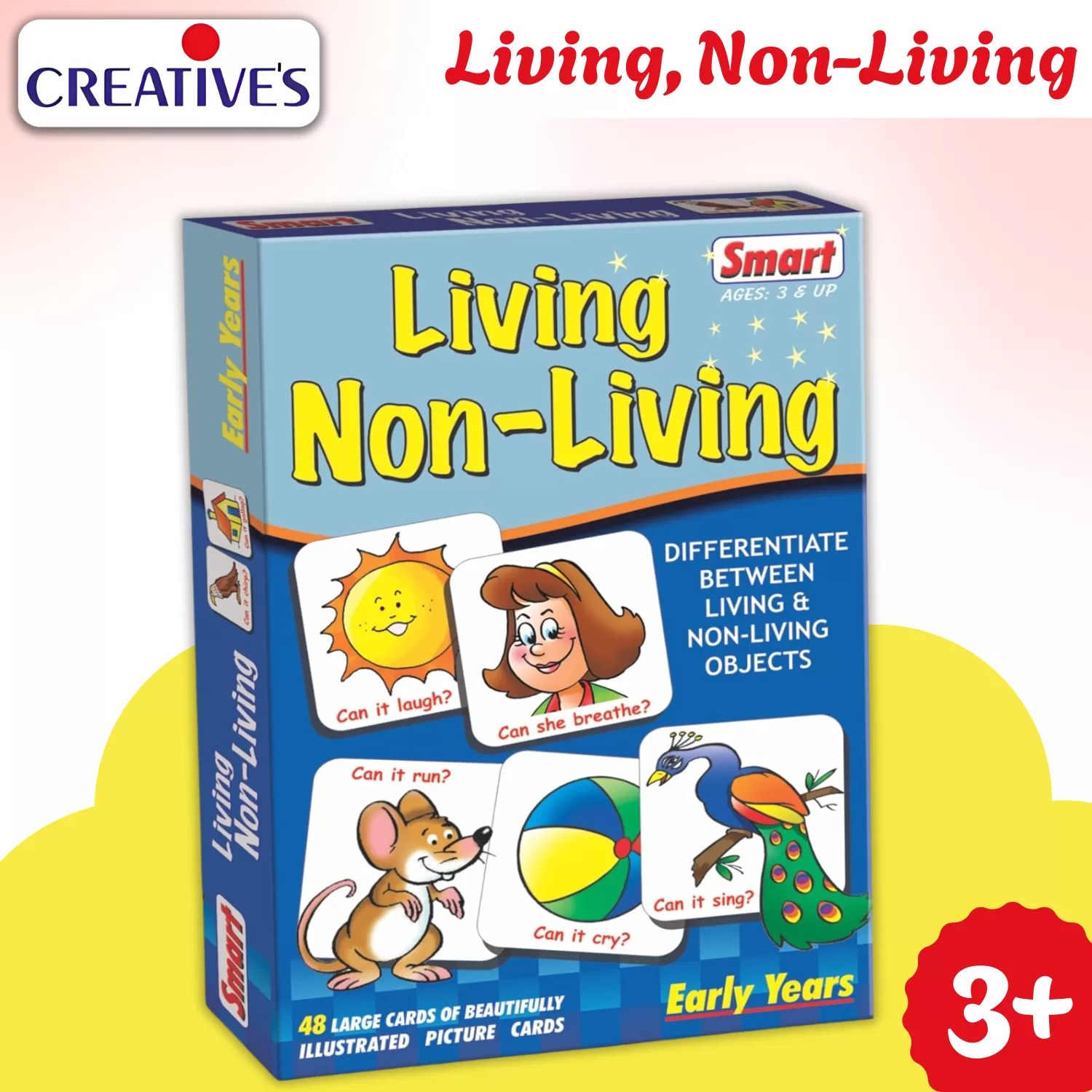
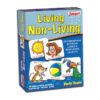
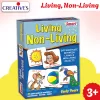
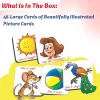
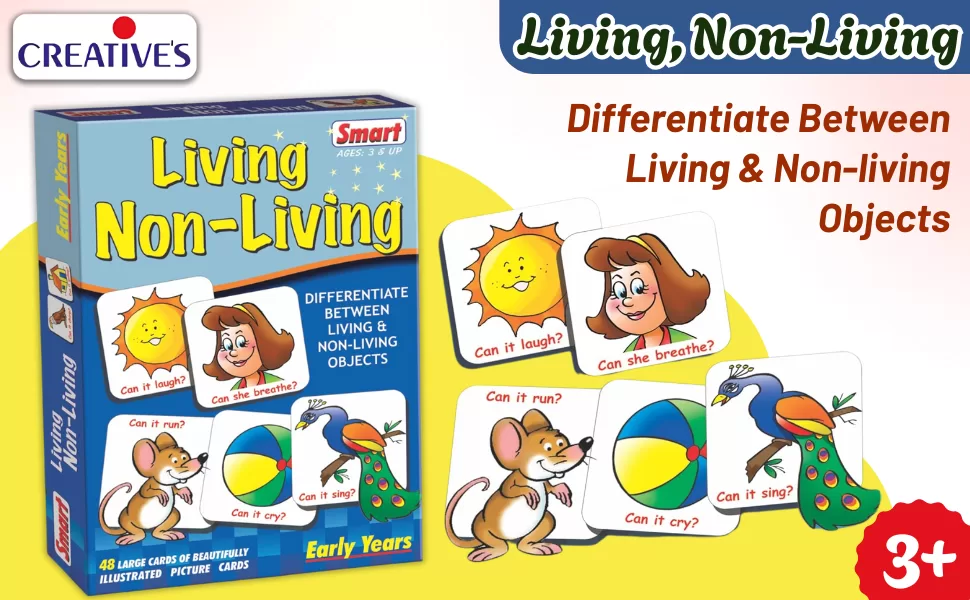
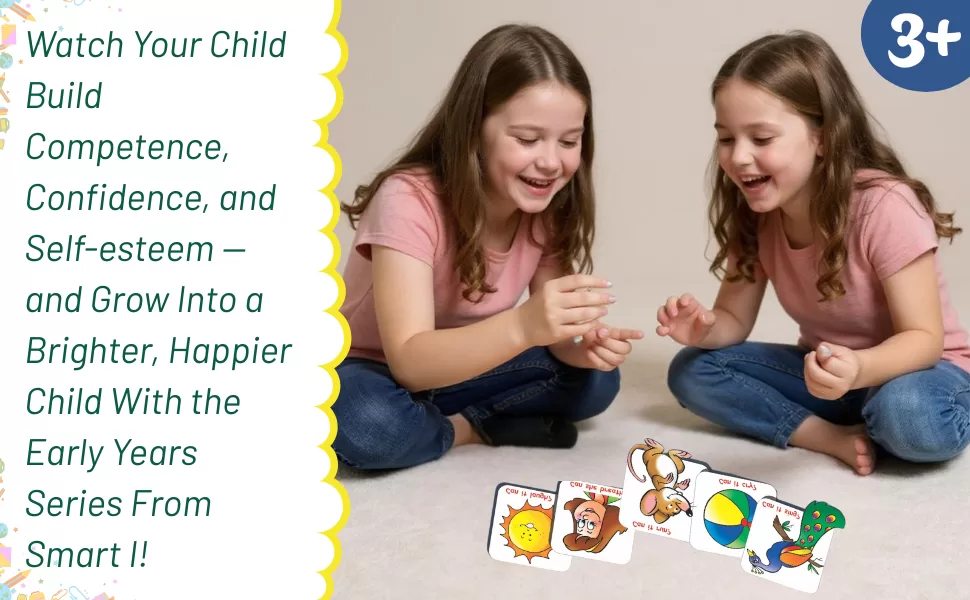
Smart Living Non-Living gives children aged 3 & up 48 large illustrated cards to differentiate living and non-living objects through picture clue questions like ‘Can it breathe?’ and ‘Can it run?’. Builds early science thinking, reasoning and vocabulary through hands-on play.
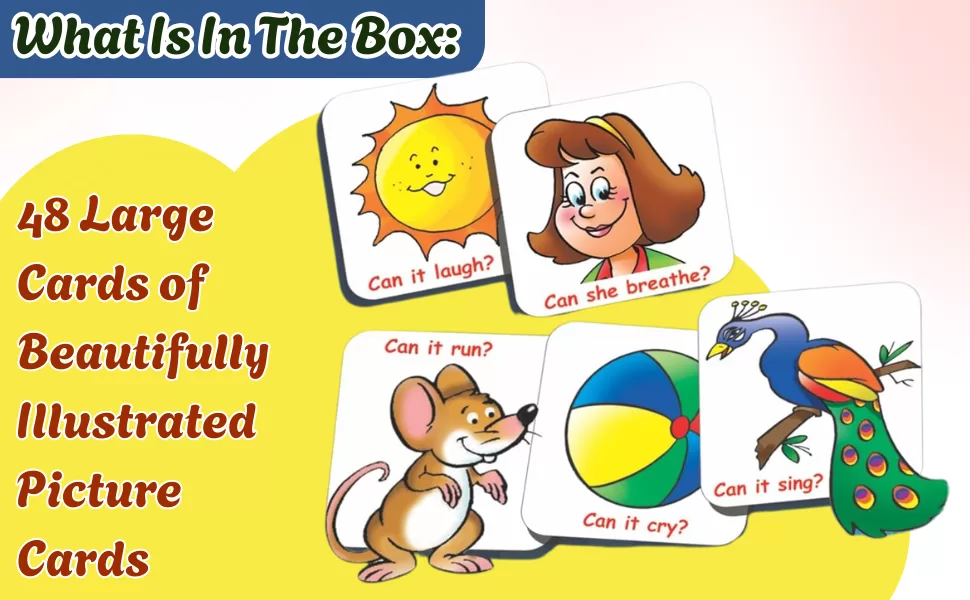
LIVING VS NON-LIVING SCIENCE CARDS 48 large illustrated cards help children aged 3+ identify and sort living and non-living objects.
QUESTION CLUE LEARNING MECHANIC Each card poses a life-property question ‘Can it breathe?’, ‘Can it sing?’, ‘Can it run?’ sparking reasoning and discussion.
SCREEN-FREE EARLY SCIENCE PLAY Picture-based card format makes abstract science concepts accessible and engaging without screens.
HOME, CLASSROOM & THERAPY USE Supports hands-on learning across home, school and therapy-friendly environments for early science development.
QUALITY, SAFETY & TRUST Smart products are proudly made in India, conforming to BIS Safety Standards (IS 9873 Part 1) and EN71 Part 1, 2 & 3 with European Toy Safety Standards trusted by parents and educators since 1987.
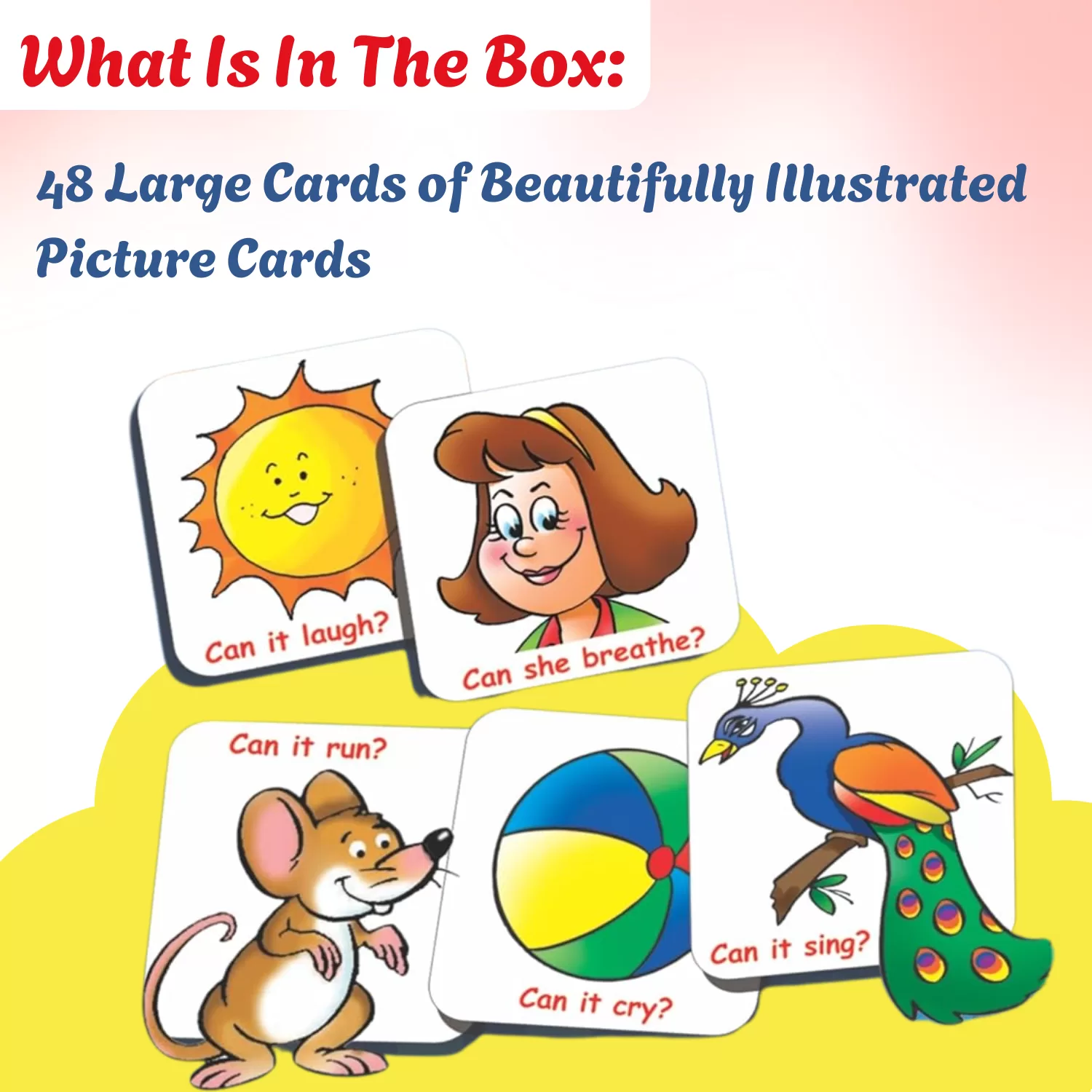
Smart Living Non-Living is a set of 48 large, beautifully illustrated
picture cards designed for children aged 3 and up. Each card shows
a vivid illustration a sun, a girl, a mouse, a ball, a peacock alongside
a simple life-property question such as 'Can it breathe?', 'Can it run?'
or 'Can it sing?' that guides children to identify whether the subject
is living or non-living. Children sort all 48 cards into two groups
living and non-living answering the question on each card to justify
their choice. This single, repeatable activity builds scientific reasoning,
vocabulary and categorical thinking through natural, conversation-led
play that works from age 3 right through to early primary school.
Parents and teachers choose this set because it makes an abstract
science concept the difference between living and non-living things
immediately accessible through pictures and simple questions.
Often used in structured play and therapy-friendly learning settings,
it is durable, self-directed and versatile across one-to-one and
group formats.
HOW CHILDREN LEARN
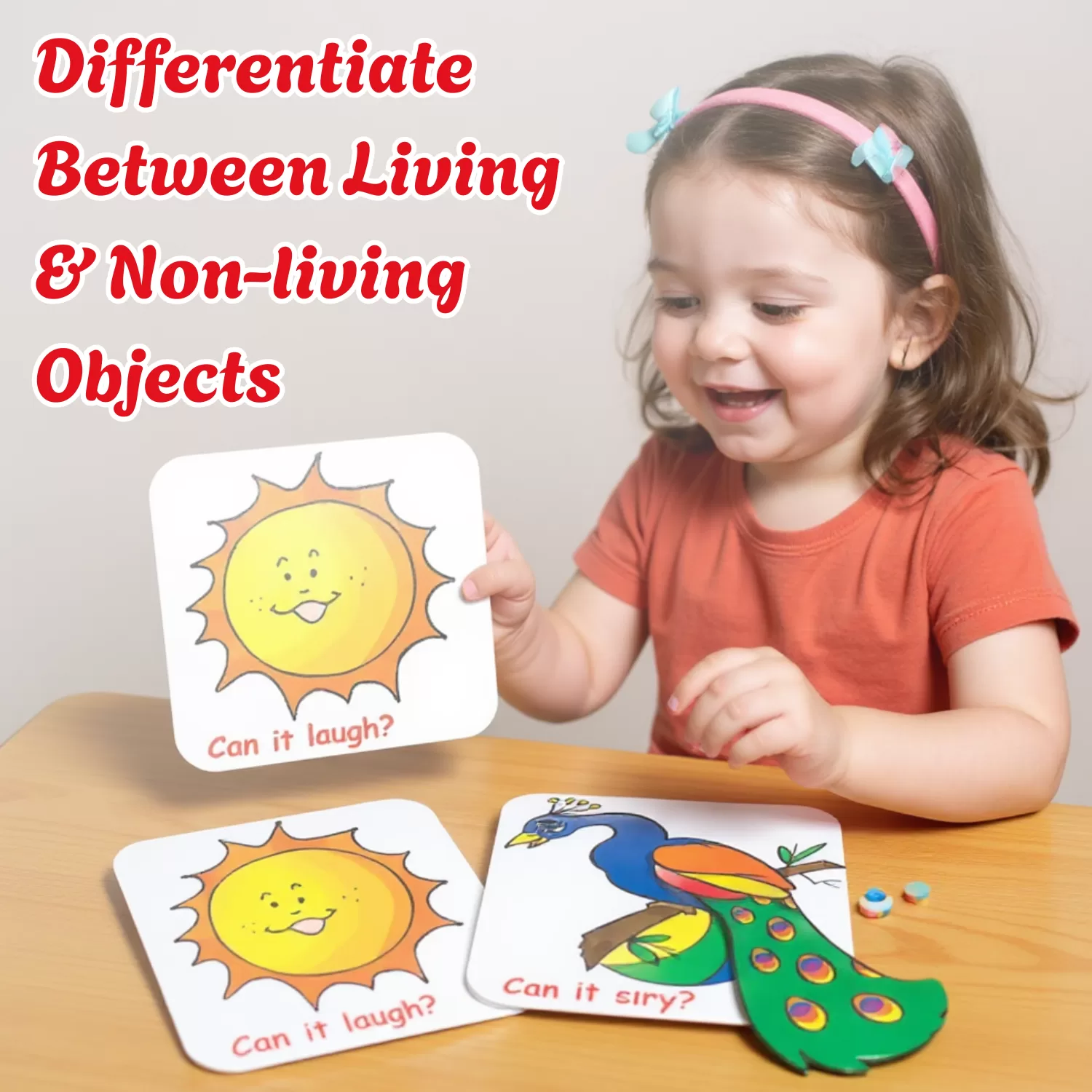
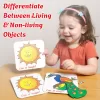
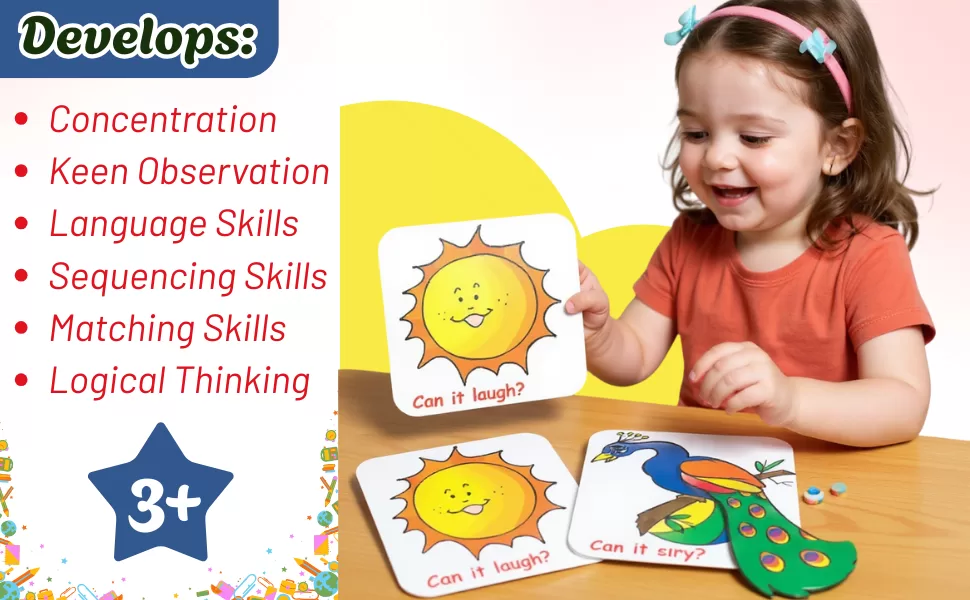
A child picks up the sun card, reads 'Can it laugh?' and decides No,
the sun cannot laugh, so it is non-living' practising logical reasoning
through a simple, familiar example.
The girl card asks 'Can she breathe?' children answer 'Yes' and place
it in the living group, building the concept that living things share
common life properties.
Sorting all 48 cards into living and non-living groups develops
categorical thinking and lays the foundation for formal science
classification in school.
The question format on each card encourages children to explain
their reasoning aloud 'It can run, so it's living' building expressive
language and scientific vocabulary simultaneously.
Repeated play across 48 varied cards animals, people, objects,
natural phenomena builds a rich and lasting understanding of
what makes something living or non-living.
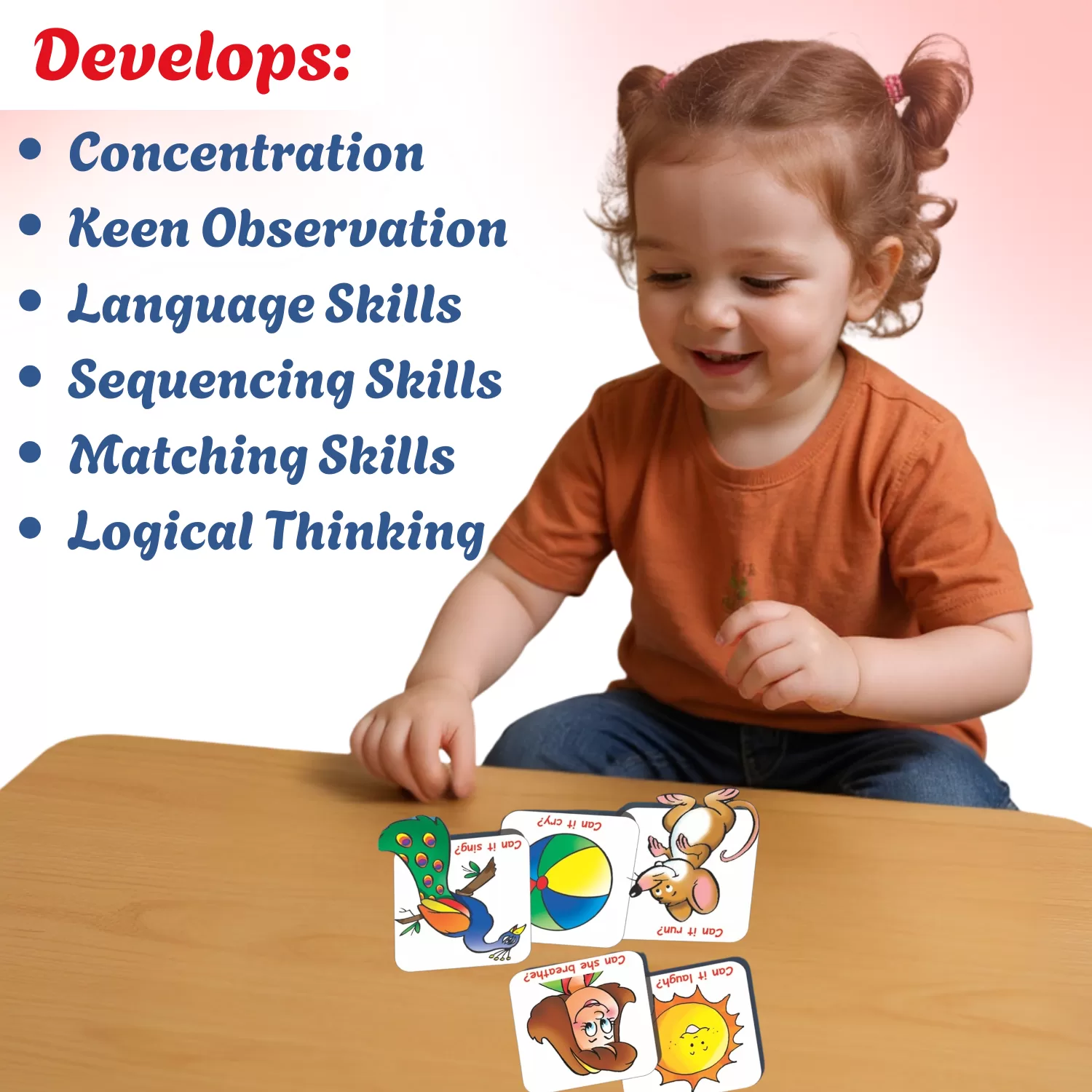
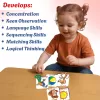
SKILLS DEVELOPED
Early Science Living vs Non-Living
Logical Reasoning
Classification & Categorisation
Expressive Language & Vocabulary
Visual Discrimination
Concentration & Focus
Cognitive Development
WHO IS IT FOR
Parents introducing basic science concepts living vs non-living
to children aged 3 to 7 at home.
Preschool and kindergarten teachers running early science
classification and sorting activities.
Speech and language therapists using question-based picture
cards to build reasoning and expressive language.
Special educators using structured picture-card sorting in
therapy-supported environments.
Homeschooling families looking for a self-directed early science
resource that works from age 3.
Primary school teachers introducing the living and non-living
concept as a pre-lesson hands-on activity.
PRODUCT FEATURES
Age Group: 3 Years & Up Players: 1 or more (individual, pairs or group play) Play Type: Picture Card Sorting & Classification Activity Educational Category: Early Science • Classification • Reasoning Contents: 48 Large, Beautifully Illustrated Picture Cards Card Mechanic: Each card features a life-property question clue
(e.g. “Can it breathe?” • “Can it run?”) Safety Certifications: BIS IS 9873 (Part 1)
• EN71 Part 1, 2 & 3 • CE Marked
Smart Living Non-Living is a set of 48 large, beautifully illustrated
picture cards designed for children aged 3 and up. Each card shows
a vivid illustration a sun, a girl, a mouse, a ball, a peacock alongside
a simple life-property question such as ‘Can it breathe?’, ‘Can it run?’
or ‘Can it sing?’ that guides children to identify whether the subject
is living or non-living. Children sort all 48 cards into two groups
living and non-living answering the question on each card to justify
their choice. This single, repeatable activity builds scientific reasoning,
vocabulary and categorical thinking through natural, conversation-led
play that works from age 3 right through to early primary school.
Parents and teachers choose this set because it makes an abstract
science concept the difference between living and non-living things
immediately accessible through pictures and simple questions.
Often used in structured play and therapy-friendly learning settings,
it is durable, self-directed and versatile across one-to-one and
group formats.
HOW CHILDREN LEARN
A child picks up the sun card, reads ‘Can it laugh?’ and decides No,
the sun cannot laugh, so it is non-living’ practising logical reasoning
through a simple, familiar example.
The girl card asks ‘Can she breathe?’ children answer ‘Yes’ and place
it in the living group, building the concept that living things share
common life properties.
Sorting all 48 cards into living and non-living groups develops
categorical thinking and lays the foundation for formal science
classification in school.
The question format on each card encourages children to explain
their reasoning aloud ‘It can run, so it’s living’ building expressive
language and scientific vocabulary simultaneously.
Repeated play across 48 varied cards animals, people, objects,
natural phenomena builds a rich and lasting understanding of
what makes something living or non-living.
SKILLS DEVELOPED
Early Science Living vs Non-Living
Logical Reasoning
Classification & Categorisation
Expressive Language & Vocabulary
Visual Discrimination
Concentration & Focus
Cognitive Development
WHO IS IT FOR
Parents introducing basic science concepts living vs non-living
to children aged 3 to 7 at home.
Preschool and kindergarten teachers running early science
classification and sorting activities.
Speech and language therapists using question-based picture
cards to build reasoning and expressive language.
Special educators using structured picture-card sorting in
therapy-supported environments.
Homeschooling families looking for a self-directed early science
resource that works from age 3.
Primary school teachers introducing the living and non-living
concept as a pre-lesson hands-on activity.
PRODUCT FEATURES
Age Group: 3 Years & Up Players: 1 or more (individual, pairs or group play) Play Type: Picture Card Sorting & Classification Activity Educational Category: Early Science • Classification • Reasoning Contents: 48 Large, Beautifully Illustrated Picture Cards Card Mechanic: Each card features a life-property question clue
(e.g. “Can it breathe?” • “Can it run?”) Safety Certifications: BIS IS 9873 (Part 1)
• EN71 Part 1, 2 & 3 • CE Marked
Good educational toy for young kids. My child stays engaged longer and I can see better patience developing. Very useful for building attention and observation in a fun way.





Good educational toy for young kids. My child stays engaged longer and I can see better patience developing. Very useful for building attention and observation in a fun way.