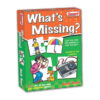
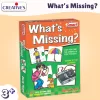
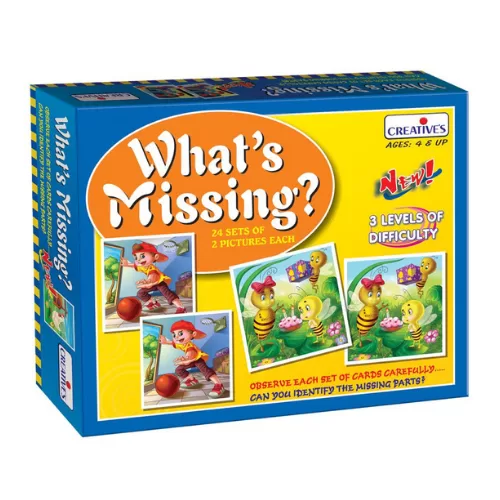
Smart What’s Missing? gives children aged 3 & up 21 self-correcting puzzles to spot what is missing from an everyday scene and match the correct object card no reading required. Builds observation, logical thinking and verbal expression through hands-on play.
About This Product
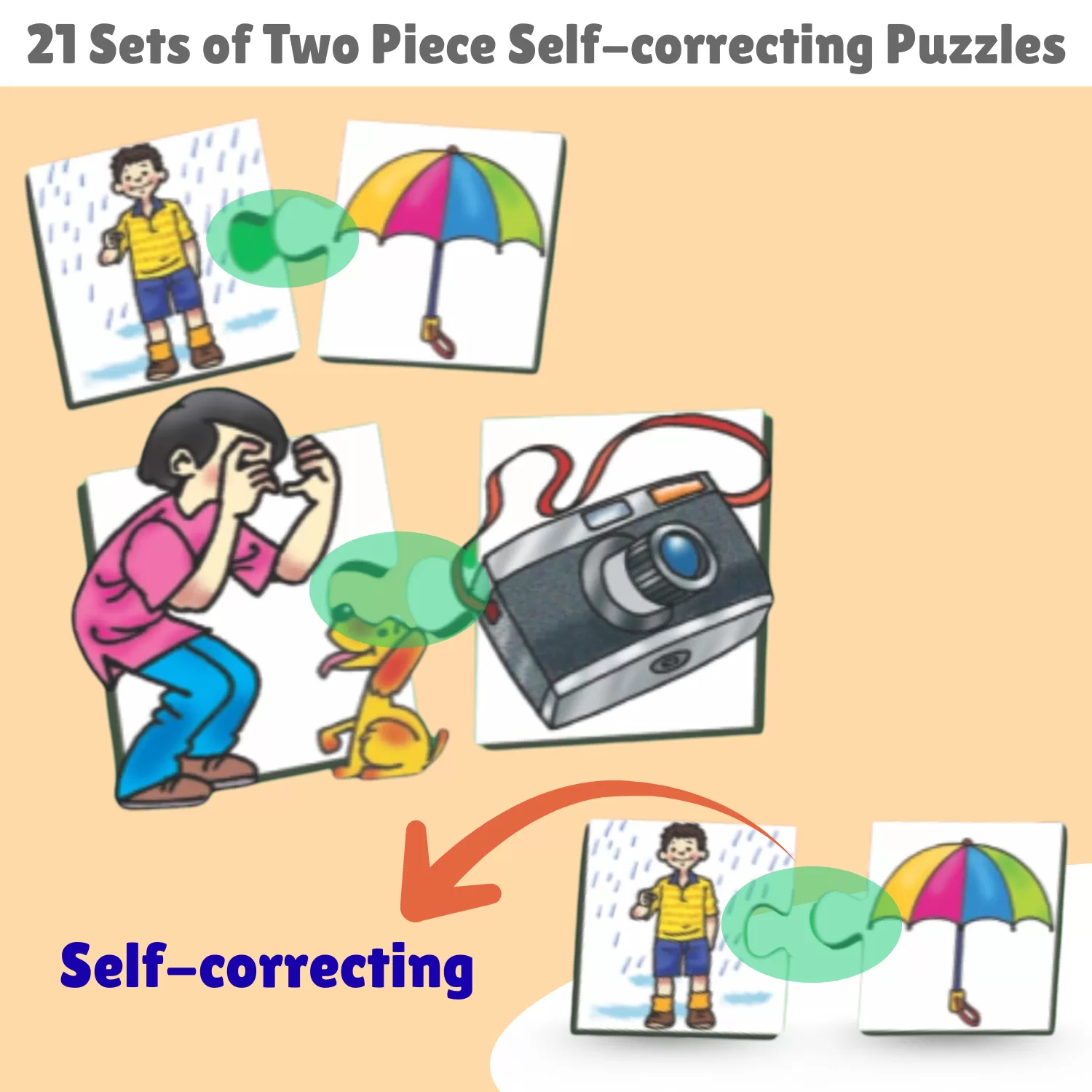
OBSERVATION & MISSING OBJECT PUZZLE 21 self-correcting two-piece sets challenge children to spot what is missing from everyday picture scenes.
NO READING OR NUMBER SKILLS NEEDED Pure picture-based matching any child aged 3 and up can play and succeed completely independently.
SCREEN-FREE VISUAL THINKING PLAY Tactile puzzle format builds sharp observation and logical deduction without screens or worksheets.
HOME, CLASSROOM & THERAPY USE Supports structured learning across home, school and therapy-friendly environments for early observation skills.
QUALITY, SAFETY & TRUST Smart products are proudly made in India, conforming to BIS Safety Standards (IS 9873 – Part 1) and EN71 Part 1, 2 & 3 with European Toy Safety Standards trusted by parents and educators since 1987.
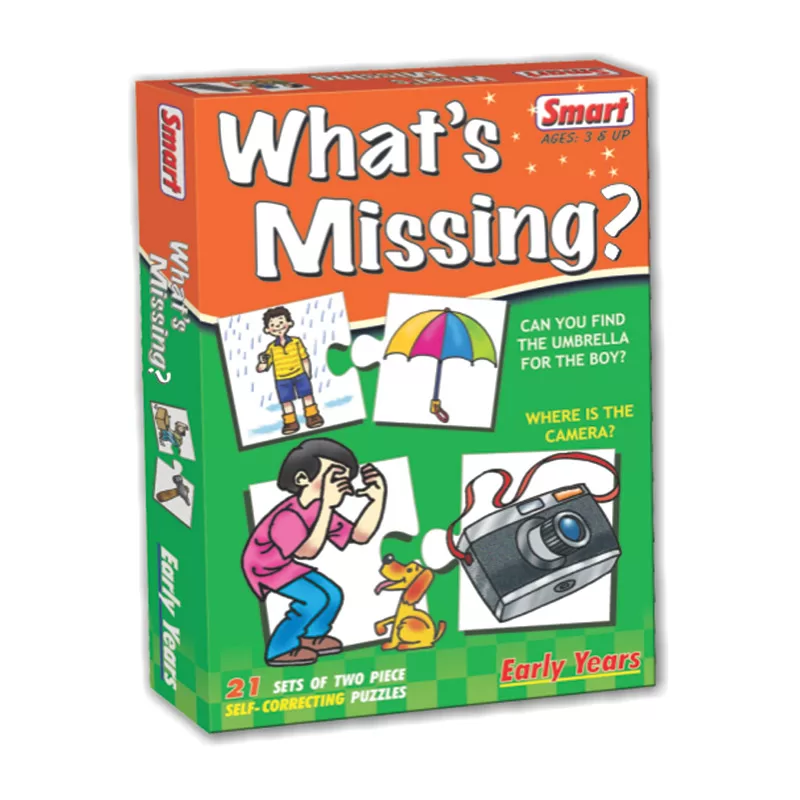
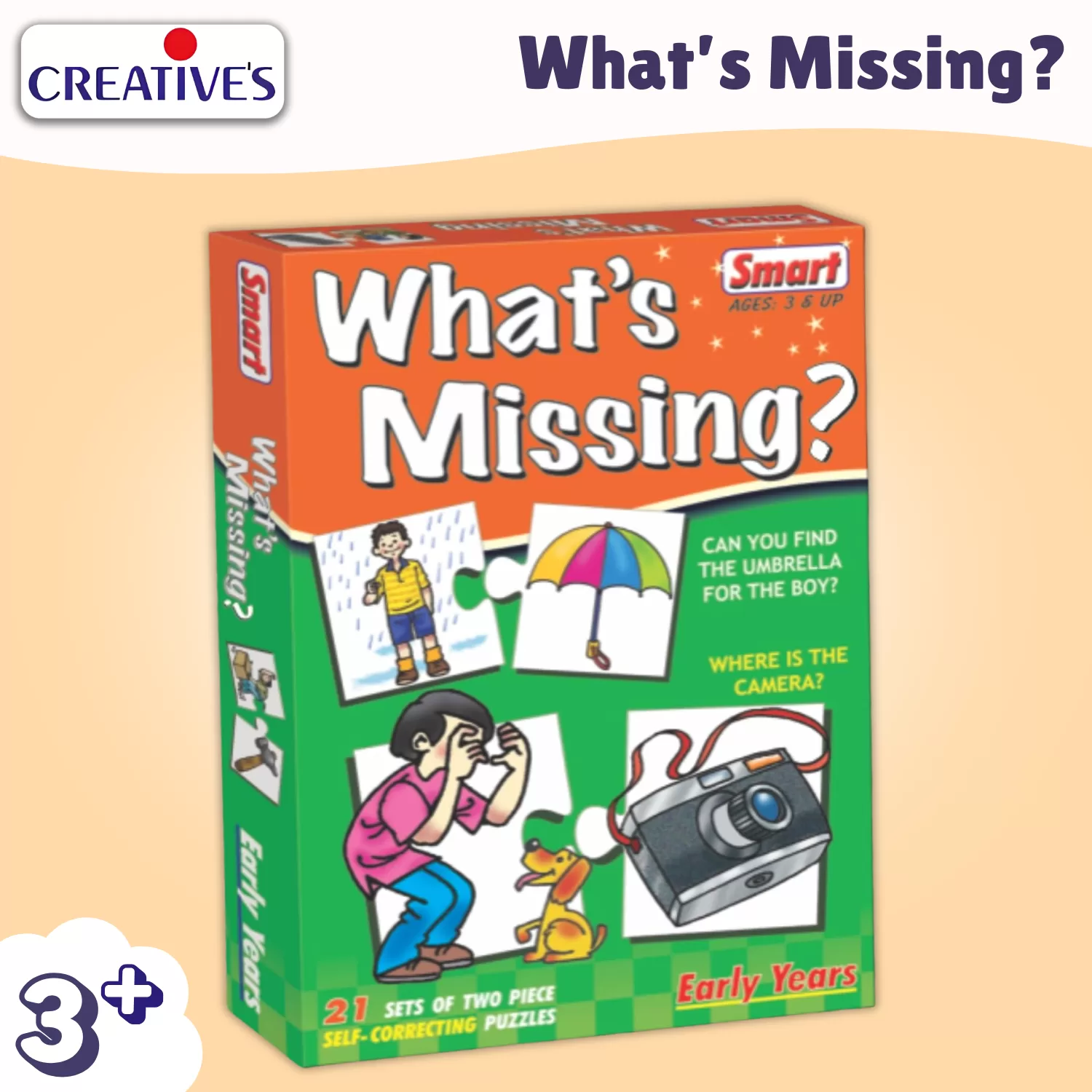
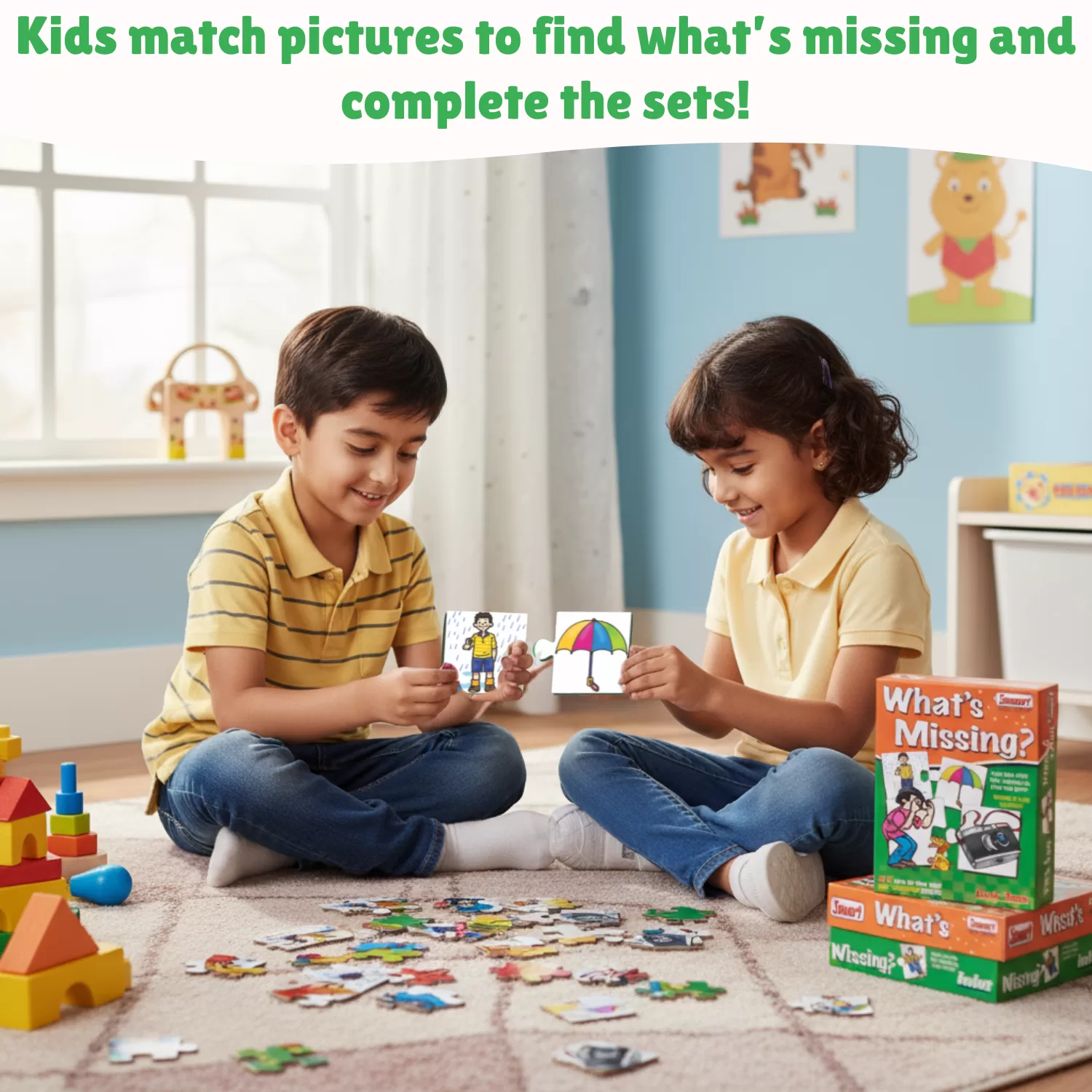
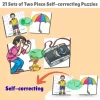
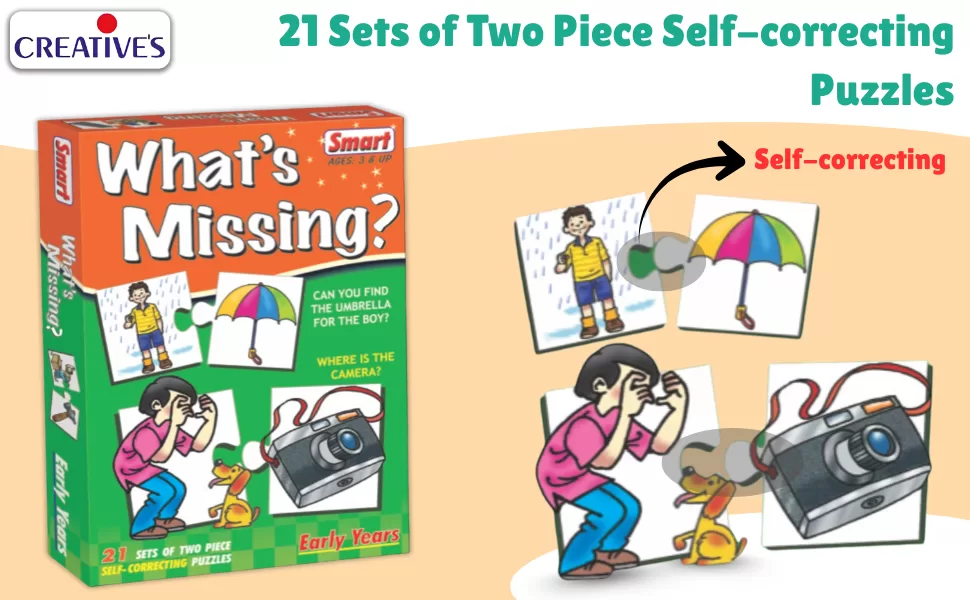
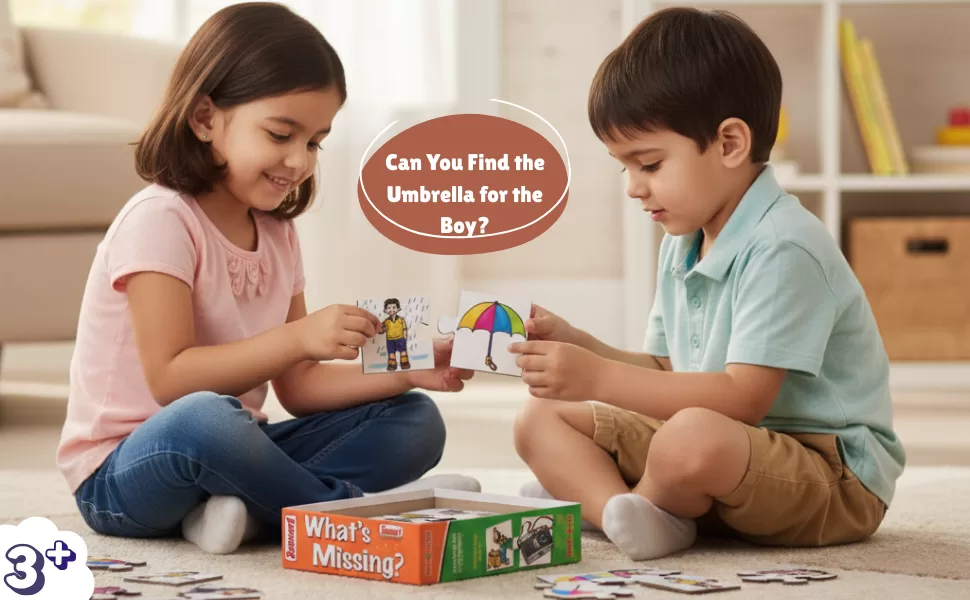
Smart What's Missing? is a 21-set, two-piece self-correcting puzzle
for children aged 3 and up. Each set shows a vivid everyday scene on
the left piece — a boy in the rain, a man photographing his dog, a
child brushing teeth — with something important missing. The right
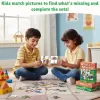
piece shows the missing object. Children observe the scene, identify
what is absent, and connect the correct puzzle piece.
Because no reading or number skills are required, the puzzle is fully
accessible from age 3. The self-correcting jigsaw format means every
correct match is confirmed by the fit — no adult needed to check.
Children work at their own pace, building sharp observation habits
and the confidence that comes from getting it right independently.
Developed in association with Early Learning Consultants, this set
is often used in structured play and therapy-friendly learning settings.
The included activity guide gives parents and teachers structured
ways to extend the activity into group observation games and
guided verbal expression exercises.
HOW CHILDREN LEARN
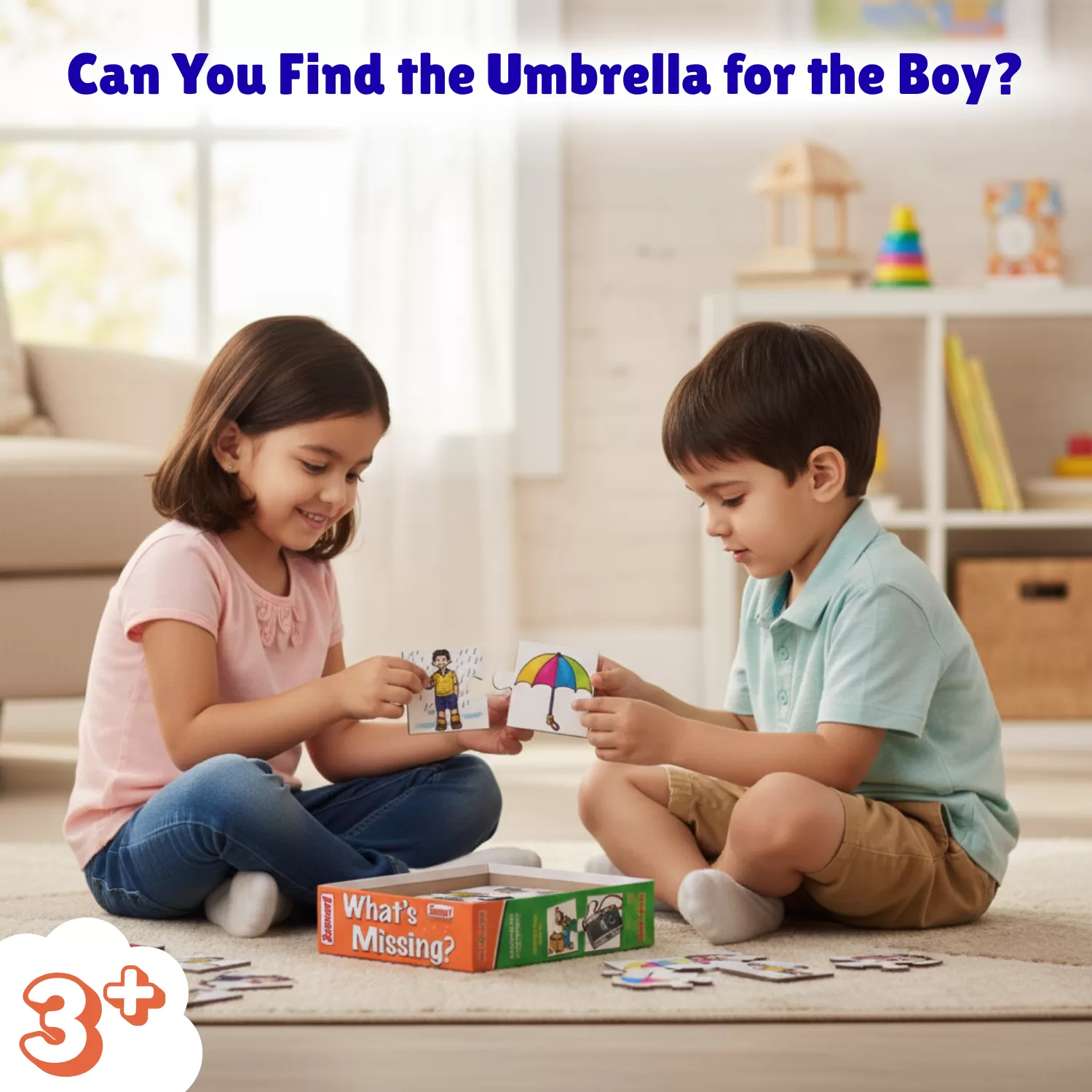
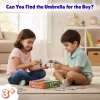
A child picks up the scene card showing a boy standing in the
rain and studies it carefully noticing he has no umbrella then
searches for and connects the umbrella puzzle piece.
The self-correcting jigsaw design confirms every correct match
instantly — children know they spotted the right missing object
without any adult feedback.
Naming the missing object aloud before matching it builds
verbal expression and object vocabulary in a natural, low-pressure
way that feels like a game.
Working through all 21 scenes trains children to look carefully
at a whole picture before reacting building the sustained
attention and detail-noticing skills that underpin reading and writing.
The activity guide extends play with structured observation
games, giving teachers and parents ways to turn the set into
group discussion activities and guided verbal exercises.
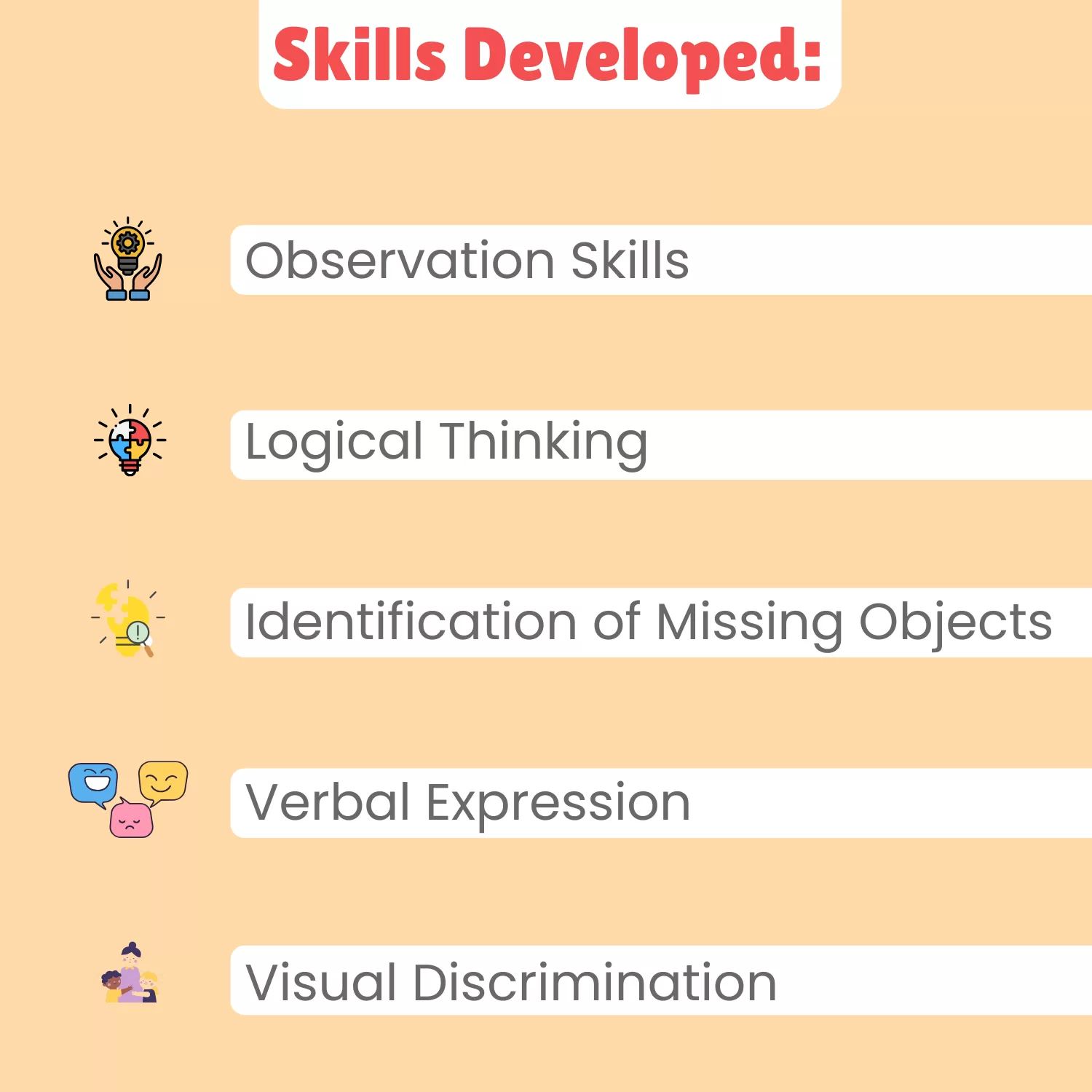
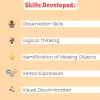
SKILLS DEVELOPED
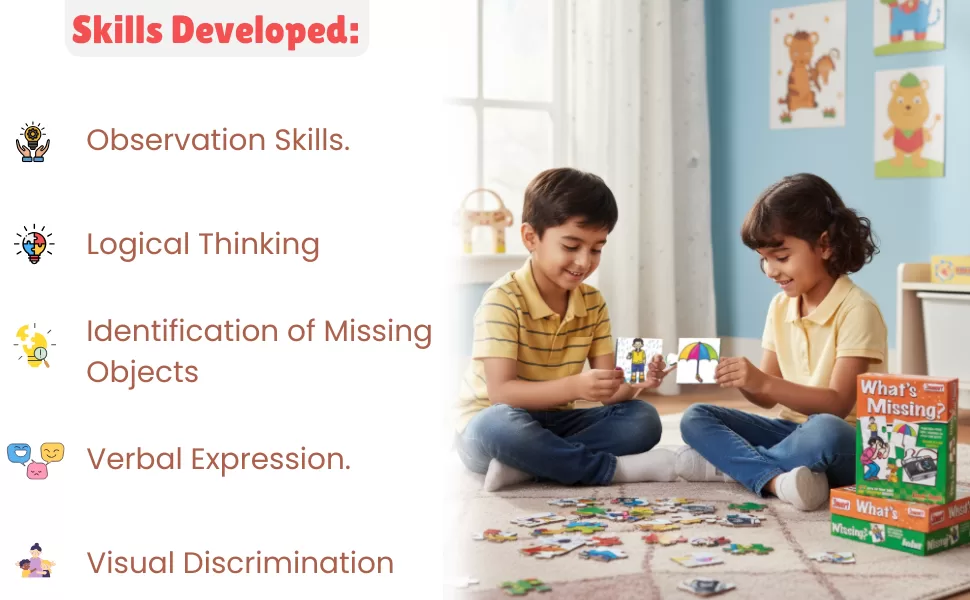
Observation Skills
Identification of Missing Objects
Verbal Expression
Matching Skills
Logical Thinking
Visual Discrimination
Concentration & Attention to Detail
WHO IS IT FOR
Parents building sharp observation and attention skills
with children aged 3 to 6 at home.
Preschool and kindergarten teachers running visual
observation and verbal expression activities.
Speech and language therapists using scene-based picture
cards to build verbal description and object identification.
Occupational therapists using visual attention and detail-noticing
tasks in structured sessions.
Homeschooling families looking for a no-reading-required,
self-directed early learning activity from age 3.
Learning centres stocking accessible, picture-only observation
games for a wide age and ability range.
PRODUCT FEATURES
Age Group: 3 Years & Up Players: 1 or more (individual or group play) Play Type: Two-Piece Self-Correcting Observation Puzzle Educational Category: Observation • Visual Reasoning • Verbal Expression Contents: 21 Sets of Two-Piece Self-Correcting Puzzles • Activity Guide Reading Required: No — fully picture-based, accessible from age 3 Safety Certifications: BIS IS 9873 (Part 1) • EN71 Part 1, 2 & 3 • CE Marked.
Smart What’s Missing? is a 21-set, two-piece self-correcting puzzle
for children aged 3 and up. Each set shows a vivid everyday scene on
the left piece — a boy in the rain, a man photographing his dog, a
child brushing teeth — with something important missing. The right
piece shows the missing object. Children observe the scene, identify
what is absent, and connect the correct puzzle piece.
Because no reading or number skills are required, the puzzle is fully
accessible from age 3. The self-correcting jigsaw format means every
correct match is confirmed by the fit — no adult needed to check.
Children work at their own pace, building sharp observation habits
and the confidence that comes from getting it right independently.
Developed in association with Early Learning Consultants, this set
is often used in structured play and therapy-friendly learning settings.
The included activity guide gives parents and teachers structured
ways to extend the activity into group observation games and
guided verbal expression exercises.
HOW CHILDREN LEARN
A child picks up the scene card showing a boy standing in the
rain and studies it carefully noticing he has no umbrella then
searches for and connects the umbrella puzzle piece.
The self-correcting jigsaw design confirms every correct match
instantly — children know they spotted the right missing object
without any adult feedback.
Naming the missing object aloud before matching it builds
verbal expression and object vocabulary in a natural, low-pressure
way that feels like a game.
Working through all 21 scenes trains children to look carefully
at a whole picture before reacting building the sustained
attention and detail-noticing skills that underpin reading and writing.
The activity guide extends play with structured observation
games, giving teachers and parents ways to turn the set into
group discussion activities and guided verbal exercises.
SKILLS DEVELOPED
Observation Skills
Identification of Missing Objects
Verbal Expression
Matching Skills
Logical Thinking
Visual Discrimination
Concentration & Attention to Detail
WHO IS IT FOR
Parents building sharp observation and attention skills
with children aged 3 to 6 at home.
Preschool and kindergarten teachers running visual
observation and verbal expression activities.
Speech and language therapists using scene-based picture
cards to build verbal description and object identification.
Occupational therapists using visual attention and detail-noticing
tasks in structured sessions.
Homeschooling families looking for a no-reading-required,
self-directed early learning activity from age 3.
Learning centres stocking accessible, picture-only observation
games for a wide age and ability range.
PRODUCT FEATURES
Age Group: 3 Years & Up Players: 1 or more (individual or group play) Play Type: Two-Piece Self-Correcting Observation Puzzle Educational Category: Observation • Visual Reasoning • Verbal Expression Contents: 21 Sets of Two-Piece Self-Correcting Puzzles • Activity Guide Reading Required: No — fully picture-based, accessible from age 3 Safety Certifications: BIS IS 9873 (Part 1) • EN71 Part 1, 2 & 3 • CE Marked.
Good educational toy for young kids. The activities feel playful but quietly build thinking and matching skills. My child enjoys it daily and doesn’t get bored quickly.







Good educational toy for young kids. The activities feel playful but quietly build thinking and matching skills. My child enjoys it daily and doesn’t get bored quickly.