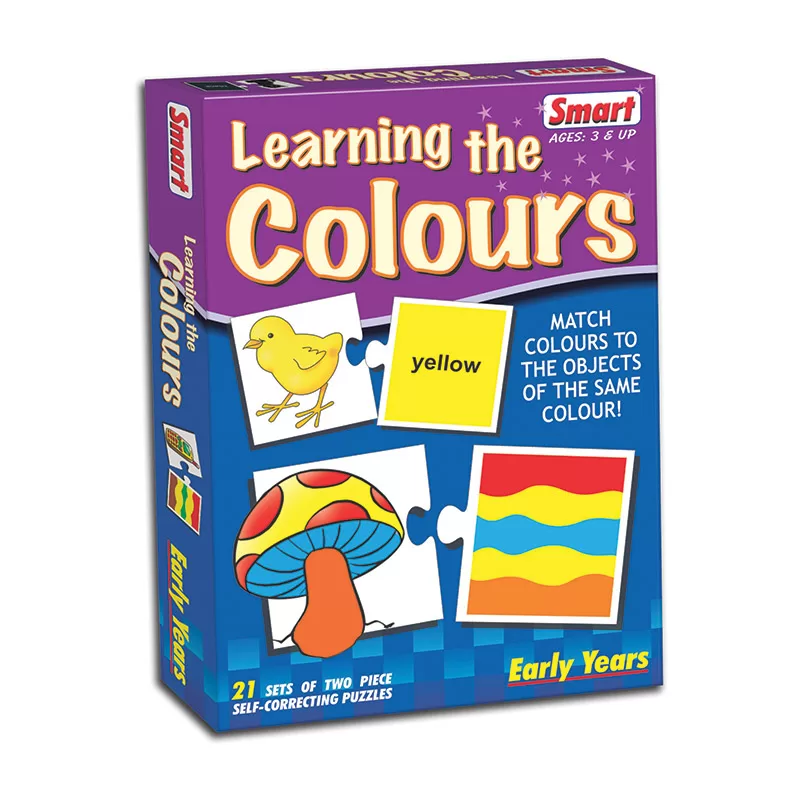
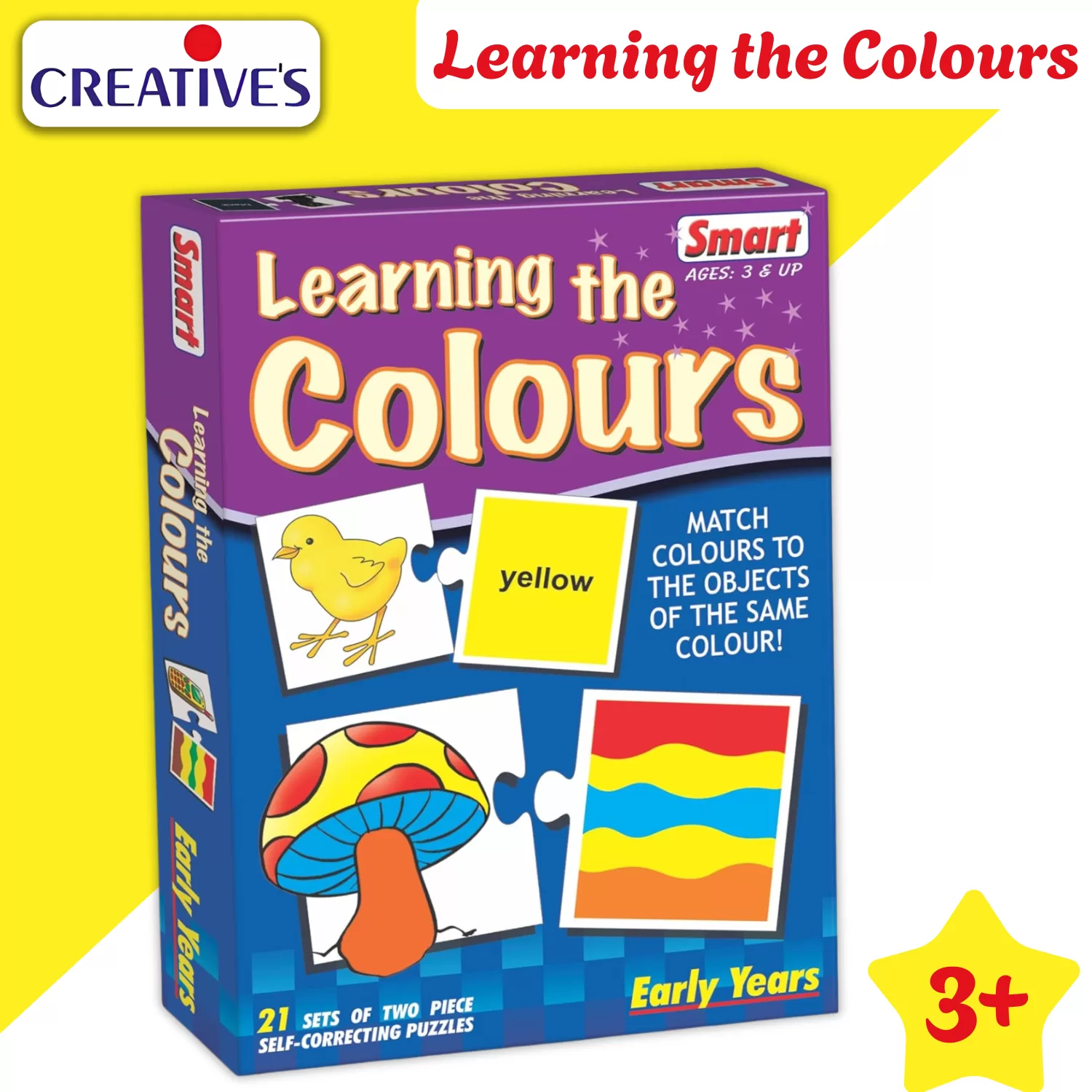
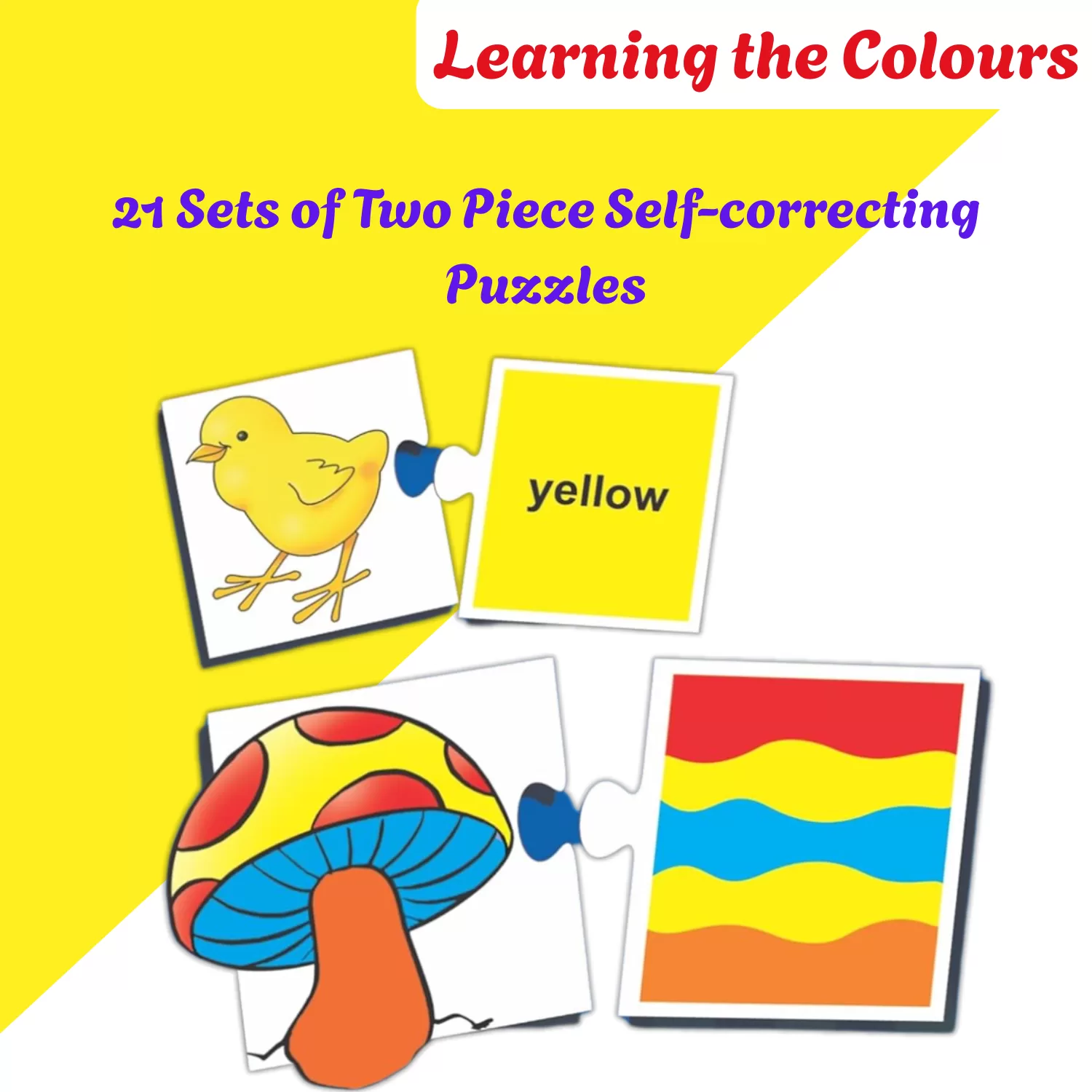
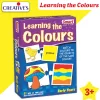
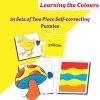
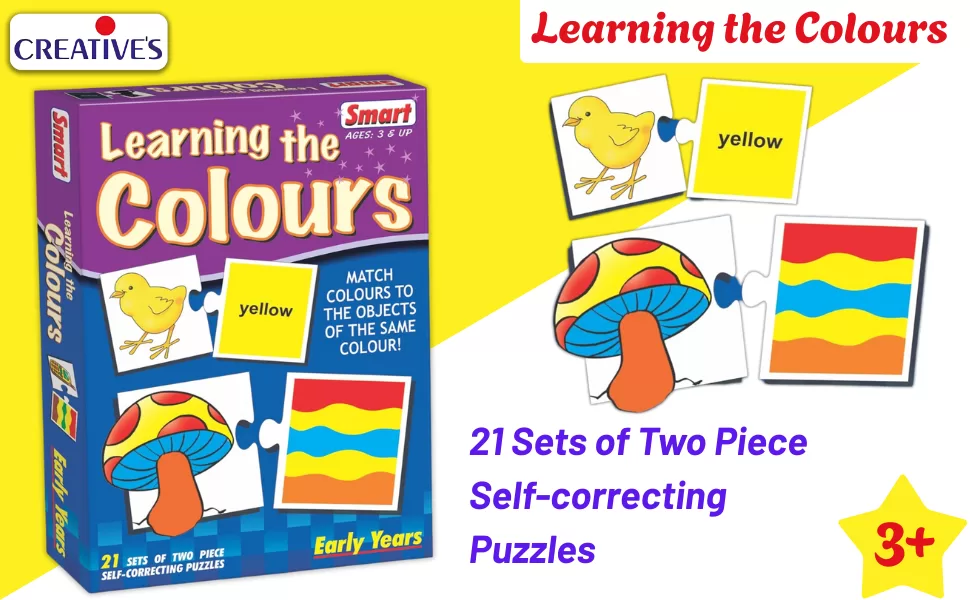
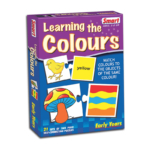
Smart Learning the Colours gives children aged 3 and up 21 self-correcting two-piece puzzles across 3 difficulty levels matching labelled colour cards to real-world objects of the same colour. Yellow pairs with a chick, orange with fruit. No reading required; builds colour recognition, visual discrimination, and observation.
About This Product
COLOUR RECOGNITION SELF-CORRECTING PUZZLE 3 DIFFICULTY LEVELS – 21 two-piece puzzles match labelled colour cards to real-world objects of the same colour at 3 progressive difficulty levels.
3 LEVELS GROW WITH YOUR CHILD – Level 1: solid colour-to-single-colour object; Level 2: two-colour patch objects; Level 3: multi-colour realistic objects — same set, increasing challenge.
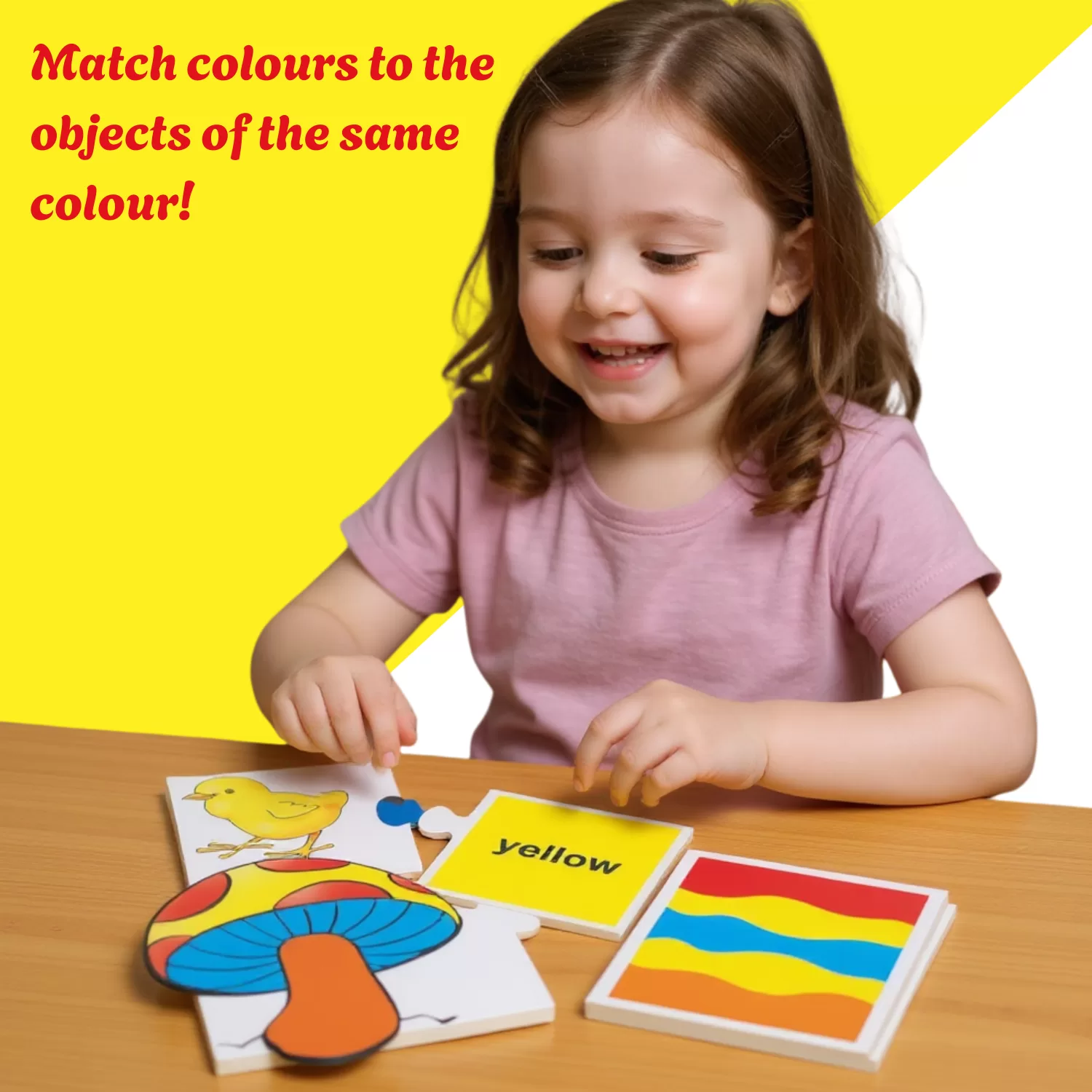
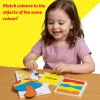
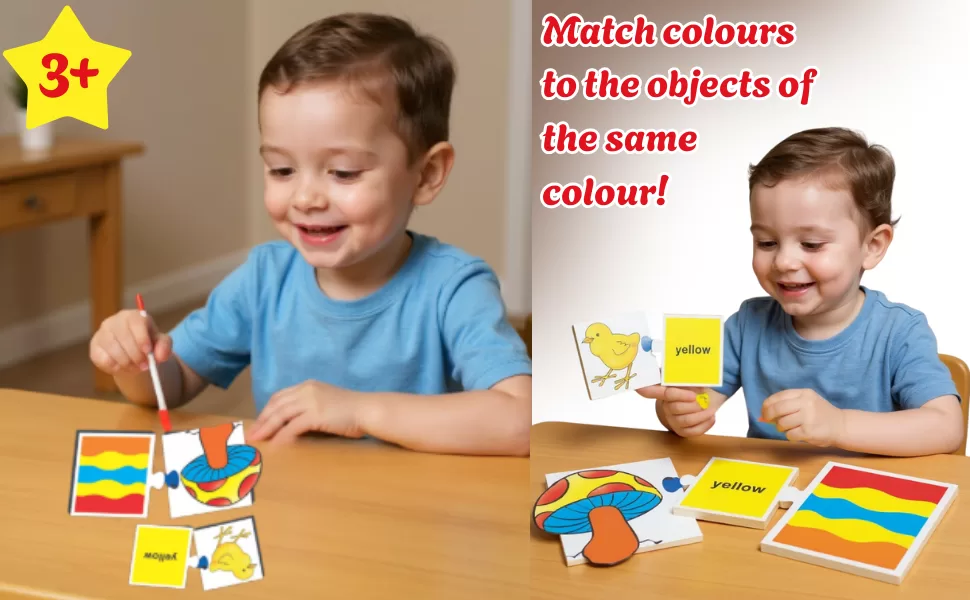
REAL-WORLD COLOUR AWARENESS NO READING REQUIRED – Children match yellow to a chick, orange to fruit — connecting abstract colour names to objects they see every day; no literacy needed to play.
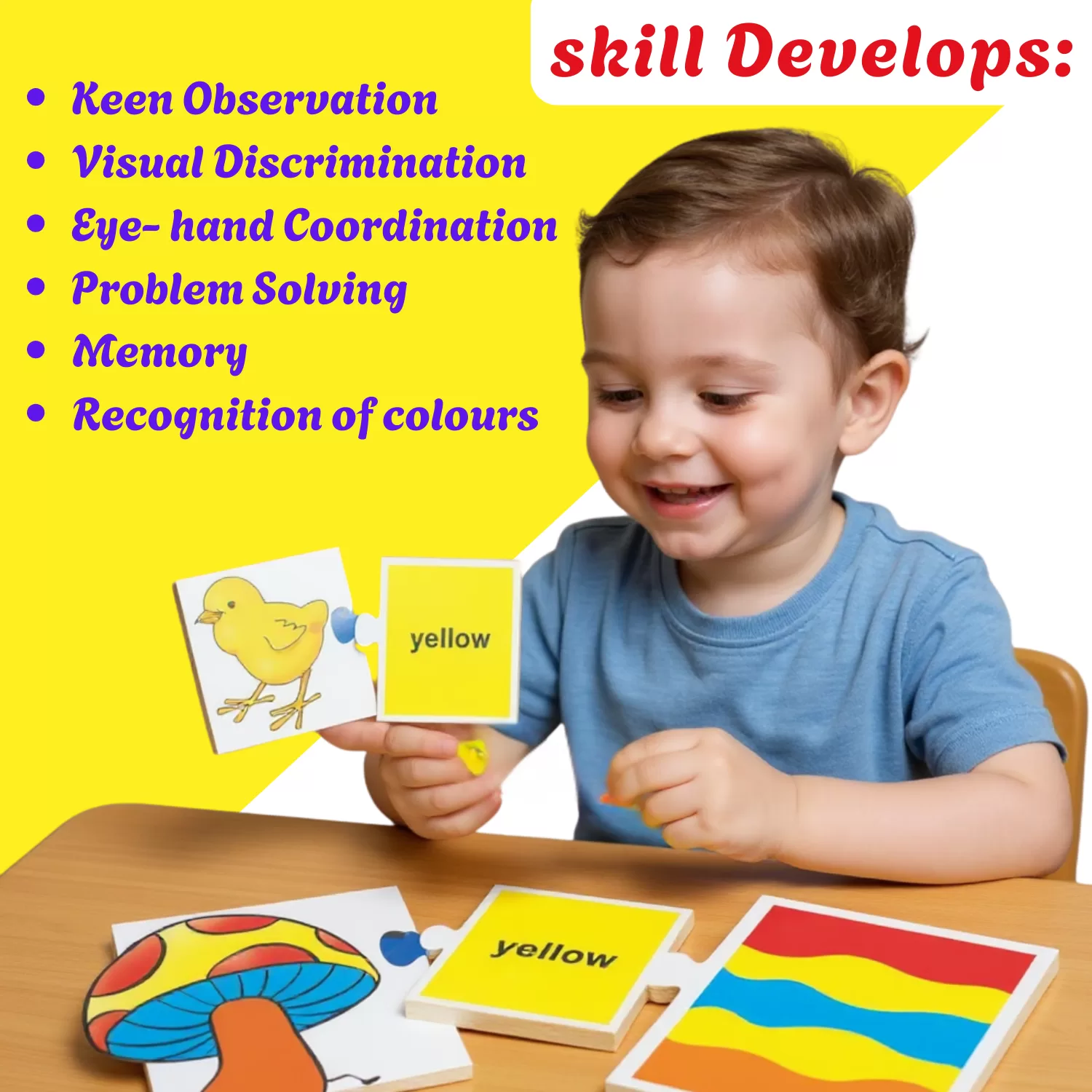
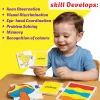
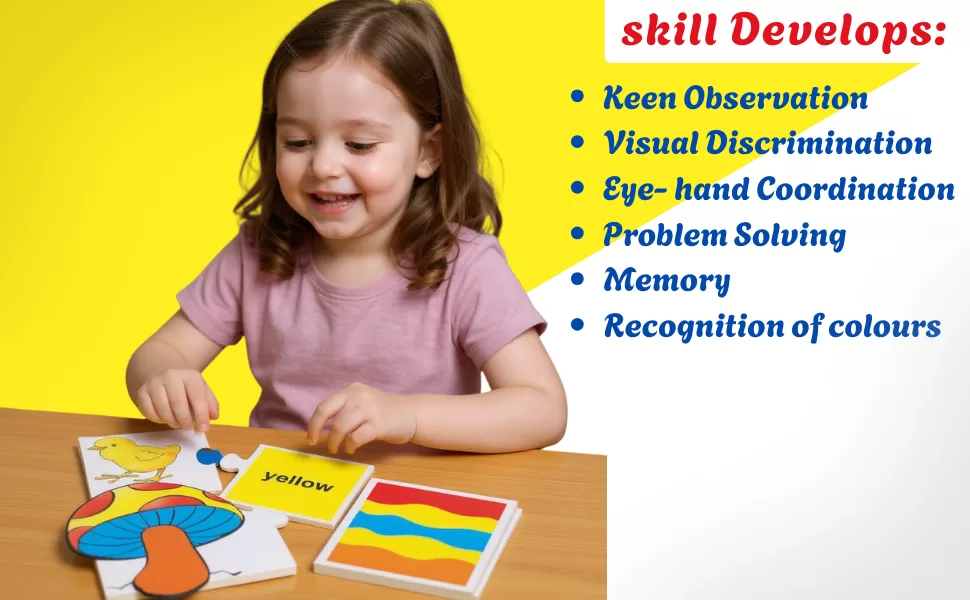
SCREEN-FREE COLOUR LEARNING HOME CLASSROOM & THERAPY – Develops visual discrimination, keen observation, memory skills, problem solving, and matching skills; suits home, nursery, and structured activity sessions from age 3.
QUALITY, SAFETY & TRUST – Smart Early Years products are proudly made in India, conforming to BIS Safety Standards (IS 9873 – Part 1) and EN71 Part 1, 2 & 3 with European Toy Safety Standards – trusted by parents and educators since 1987.
Smart Learning the Colours teaches children aged 3 and up to recognise
and name colours through real-world object matching rather than
abstract colour swatches. Twenty-one self-correcting two-piece puzzles
are organised across three difficulty levels — Level 1 matches solid
colour cards to single-colour objects, Level 2 introduces two-colour
patch objects, and Level 3 challenges children to identify a specific
colour within a realistic multi-colour image. Every colour card is
labelled, and the self-correcting puzzle shapes mean only the
correct match physically fits.
No reading or number skills are required. The back panel gives
parents and teachers a ready-made activity extension: 'Find me
a Red bucket... show me the Blue pencil. What are the colours
in your shirt?' — turning the puzzle session into an environment-wide
colour hunt. The included Activity Guide extends this further into
group games and colour recognition challenges beyond the basic
matching format.
Parents and teachers choose Learning the Colours because the
three-level structure keeps it useful from first colour recognition
at age 3 through to confident multi-colour discrimination at age
5 or 6. It is often used in structured play and therapy-friendly
learning settings for colour naming, visual discrimination, and
attention to detail. Developed in association with Early Learning
Consultants.
How Children Learn
At Level 1, a child holds the solid orange colour card and scans
the object cards to find the orange object — a straightforward
colour-to-object connection that most 3-year-olds can make
successfully and confidently from the first session.
Level 2 raises the challenge: the object cards now show two-colour
patches rather than a single solid colour, so the child must identify
which of the two colours matches the colour card — introducing
selective attention and colour comparison within a single image.
Level 3 uses realistic multi-colour objects such as an apple or a
spinning top where the target colour is present but surrounded
by other colours — children must identify a specific colour within
a complex image, which is a significantly harder visual discrimination
task.
The labelled colour cards ('yellow', 'orange') mean children
encounter colour words in print repeatedly as they play building
colour vocabulary and print awareness simultaneously without
any formal reading instruction.
The back panel prompt 'Find me a Red bucket. show me the
Blue pencil. What are the colours in your shirt?' extends the
activity into the real environment, encouraging children to hunt
for their matched colours beyond the puzzle box and connecting
classroom learning to daily life.
Skills Developed
Colour Recognition
Visual Discrimination
Keen Observation
Memory Skills
Problem Solving
Matching Skills
Colour Vocabulary
Who Is It For
Children aged 3 and above who are beginning to recognise and
name colours through hands-on activity rather than flashcards.
Parents looking for a colour learning activity with three difficulty
levels that grows with their child across years.
Nursery and reception teachers covering colour recognition as part
of early maths, art, and observation sessions.
Occupational therapists and early years practitioners using colour
recognition activities for visual discrimination and attention development.
Parents of children starting school who want to build strong colour
vocabulary and real-world colour awareness before formal learning begins.
Gift-buyers looking for a complete colour learning puzzle with genuine
long-term use value for a child aged 3 to 6.
PRODUCT FEATURES
Age Group: 3 Years & Above Number of Players: 1 or more Play Type: Self-Correcting Colour Recognition Puzzle
• Real-World Colour Matching Activity Educational Category: Colour Recognition • Visual Discrimination
• Observation • Matching Skills Contents: 21 Sets of Two-Piece Self-Correcting Puzzles (42 pieces total)
• Activity Guide 3 Difficulty Levels: Level 1: Solid colour card to single-colour object
• Level 2: Colour card to two-colour patch object
• Level 3: Colour card to multi-colour realistic object Colour–Object Pairs Confirmed: Yellow/Chick
• Orange/Fruit object Special Feature: No reading or number skills
required — accessible to all children from age 3 Developed With: Early Learning Consultants Brand: Smart Early Years Series
(manufactured by Creative Educational Aids Pvt Ltd) Safety Certifications: BIS (IS 9873 – Part 1) • CE Mark Product Code: 01002
Smart Learning the Colours teaches children aged 3 and up to recognise
and name colours through real-world object matching rather than
abstract colour swatches. Twenty-one self-correcting two-piece puzzles
are organised across three difficulty levels — Level 1 matches solid
colour cards to single-colour objects, Level 2 introduces two-colour
patch objects, and Level 3 challenges children to identify a specific
colour within a realistic multi-colour image. Every colour card is
labelled, and the self-correcting puzzle shapes mean only the
correct match physically fits.
No reading or number skills are required. The back panel gives
parents and teachers a ready-made activity extension: ‘Find me
a Red bucket… show me the Blue pencil. What are the colours
in your shirt?’ — turning the puzzle session into an environment-wide
colour hunt. The included Activity Guide extends this further into
group games and colour recognition challenges beyond the basic
matching format.
Parents and teachers choose Learning the Colours because the
three-level structure keeps it useful from first colour recognition
at age 3 through to confident multi-colour discrimination at age
5 or 6. It is often used in structured play and therapy-friendly
learning settings for colour naming, visual discrimination, and
attention to detail. Developed in association with Early Learning
Consultants.
How Children Learn
At Level 1, a child holds the solid orange colour card and scans
the object cards to find the orange object — a straightforward
colour-to-object connection that most 3-year-olds can make
successfully and confidently from the first session.
Level 2 raises the challenge: the object cards now show two-colour
patches rather than a single solid colour, so the child must identify
which of the two colours matches the colour card — introducing
selective attention and colour comparison within a single image.
Level 3 uses realistic multi-colour objects such as an apple or a
spinning top where the target colour is present but surrounded
by other colours — children must identify a specific colour within
a complex image, which is a significantly harder visual discrimination
task.
The labelled colour cards (‘yellow’, ‘orange’) mean children
encounter colour words in print repeatedly as they play building
colour vocabulary and print awareness simultaneously without
any formal reading instruction.
The back panel prompt ‘Find me a Red bucket. show me the
Blue pencil. What are the colours in your shirt?’ extends the
activity into the real environment, encouraging children to hunt
for their matched colours beyond the puzzle box and connecting
classroom learning to daily life.
Skills Developed
Colour Recognition
Visual Discrimination
Keen Observation
Memory Skills
Problem Solving
Matching Skills
Colour Vocabulary
Who Is It For
Children aged 3 and above who are beginning to recognise and
name colours through hands-on activity rather than flashcards.
Parents looking for a colour learning activity with three difficulty
levels that grows with their child across years.
Nursery and reception teachers covering colour recognition as part
of early maths, art, and observation sessions.
Occupational therapists and early years practitioners using colour
recognition activities for visual discrimination and attention development.
Parents of children starting school who want to build strong colour
vocabulary and real-world colour awareness before formal learning begins.
Gift-buyers looking for a complete colour learning puzzle with genuine
long-term use value for a child aged 3 to 6.
PRODUCT FEATURES
Age Group: 3 Years & Above Number of Players: 1 or more Play Type: Self-Correcting Colour Recognition Puzzle
• Real-World Colour Matching Activity Educational Category: Colour Recognition • Visual Discrimination
• Observation • Matching Skills Contents: 21 Sets of Two-Piece Self-Correcting Puzzles (42 pieces total)
• Activity Guide 3 Difficulty Levels: Level 1: Solid colour card to single-colour object
• Level 2: Colour card to two-colour patch object
• Level 3: Colour card to multi-colour realistic object Colour–Object Pairs Confirmed: Yellow/Chick
• Orange/Fruit object Special Feature: No reading or number skills
required — accessible to all children from age 3 Developed With: Early Learning Consultants Brand: Smart Early Years Series
(manufactured by Creative Educational Aids Pvt Ltd) Safety Certifications: BIS (IS 9873 – Part 1) • CE Mark Product Code: 01002





Works perfectly for our daily play time. Good value for money; quality is better than expected. Great for travel and quiet time; compact and engaging.