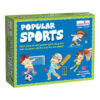
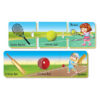
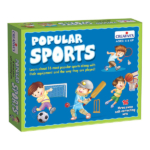
Creative’s Popular Sports uses 16 three-piece self-correcting puzzle sets to help children aged 5 and up match each sport to its equipment and how it is played — cricket bat to cricket ball to cricket player, tennis racket to tennis ball to tennis player. Used at home and in primary classrooms, the set includes Information Sheets for deeper sport knowledge.
About This Product
POPULAR SPORTS PUZZLE SETS — 16 SPORTS AGES 5 AND UP —
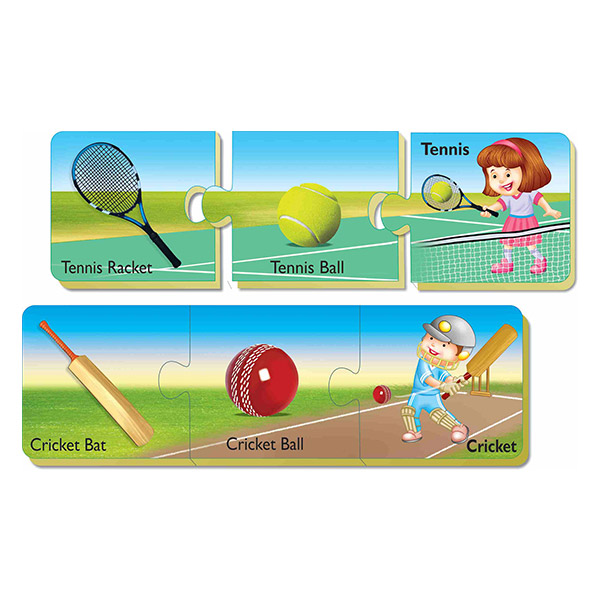
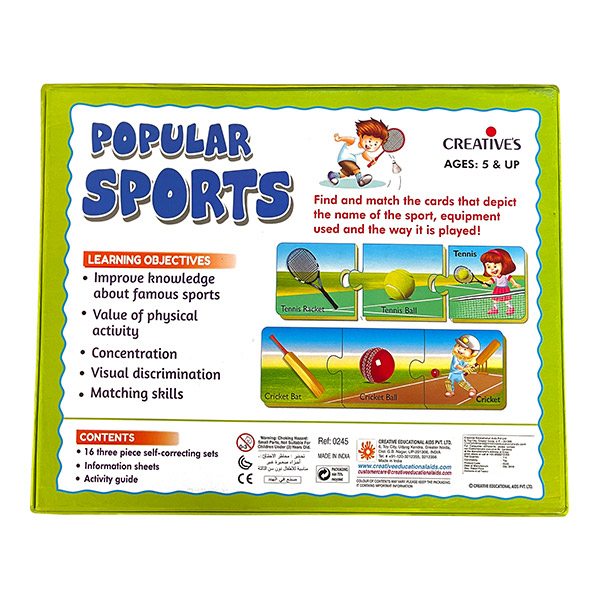
16 three-piece self-correcting sets cover popular sports including cricket, tennis, football, badminton and basketball — each with equipment, ball/object, and player in action.
SELF-CORRECTING THREE-PIECE SPORT, EQUIPMENT & PLAYER MATCH —
Shaped puzzle pieces only connect in the correct combination — cricket bat, cricket ball, cricket player — so children discover correct matches through reasoning.
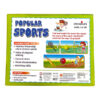
INFORMATION SHEETS INCLUDED — SPORTS KNOWLEDGE BEYOND THE PUZZLE —
Unique in this format: included Information Sheets give children and parents deeper facts about each sport and how it is played, extending learning beyond the card activity.
HOME & CLASSROOM SPORTS SCIENCE ACTIVITY — SOLO AND GROUP —
Supports hands-on learning across home, classroom and PE-linked sessions; covers sports vocabulary, physical activity awareness and visual discrimination skills.
QUALITY, SAFETY & TRUST Creative’s products are proudly made in India, conforming to BIS Safety Standards (IS 9873 – Part 1) and EN71 Part 1, 2 & 3 with European Toy Safety Standards trusted by parents and educators since 1987.
Creative's Popular Sports gives children aged 5 and up 16 three-piece
self-correcting puzzle sets — each covering one sport through equipment,
ball or object, and a player in action. Cricket bat connects to cricket ball
connects to cricket player. Tennis racket connects to tennis ball connects
to tennis player at the net. The shaped pieces only fit in the correct combination,
so children discover each sport through active reasoning rather than guesswork.
Unlike most puzzle card activities, Popular Sports includes Information
Sheets alongside the puzzle sets — giving children and parents brief, accessible
facts about each sport and how it is played. This makes the activity genuinely
educational beyond the matching mechanic, connecting the card to real
knowledge about the game.
Primary teachers use Popular Sports for PE-linked literacy sessions and
general knowledge activities. Sports-loving parents choose it because their
children engage immediately and leave the activity able to name equipment
they had never thought to name before.
HOW CHILDREN LEARN
A child picks up the cricket bat piece, identifies the sport, finds the
cricket ball piece, then locates the player in batting position connecting
all three pieces of a sport they may watch at home into one complete picture.
When pieces do not fit, the self-correcting shapes tell the child
immediately — tennis equipment will not connect to a cricket player
so they try new combinations and build reasoning skills through the process.
Reading the Information Sheet for each completed sport set deepens
vocabulary and understanding: how many players on a team,
what the court or pitch looks like, and what the rules involve.
Completing all 16 sport sets gives children a broad vocabulary
of global sports — from cricket and badminton to sports they
may not have played but can now name, describe, and connect
to the right equipment.
The value of physical activity objective is embedded in the discussion:
every sport set is an opportunity to ask 'have you tried this?'
connecting classroom knowledge to the child's own body and experience.
Children aged 5 and up who love sport and want to learn the
names of equipment, rules, and how different games are played.
Parents of sport-enthusiastic children looking for a screen-free
activity that builds knowledge about cricket, tennis, football, and more.
Primary school teachers running PE-linked literacy, general
knowledge, or sports awareness sessions for early years groups.
Homeschooling families covering physical education, sports history,
or vocabulary as part of a health and wellbeing or citizenship curriculum.
Special educators who use picture-matching puzzle formats in
structured vocabulary and classification sessions.
After-school sports clubs and activity leaders who want a knowledge
building activity that connects to children's sporting interests.
PRODUCT FEATURES TABLE
Age Group: 5 Years and Above Players: Solo or Small Group Play Type: Three-Piece Self-Correcting Interlocking Puzzle Card
Activity with Information Sheets Educational Category: Sports Knowledge, PE, Vocabulary, Visual
Discrimination, Physical Activity Awareness Contents: 16 Three-Piece Self-Correcting Sets, Information Sheets,
Activity Guide Safety Certifications: BIS IS 9873 Part 1, EN71 Part 1, 2 & 3,
CE Marked (Not suitable for children under 3 — choking hazard)
Creative’s Popular Sports gives children aged 5 and up 16 three-piece
self-correcting puzzle sets — each covering one sport through equipment,
ball or object, and a player in action. Cricket bat connects to cricket ball
connects to cricket player. Tennis racket connects to tennis ball connects
to tennis player at the net. The shaped pieces only fit in the correct combination,
so children discover each sport through active reasoning rather than guesswork.
Unlike most puzzle card activities, Popular Sports includes Information
Sheets alongside the puzzle sets — giving children and parents brief, accessible
facts about each sport and how it is played. This makes the activity genuinely
educational beyond the matching mechanic, connecting the card to real
knowledge about the game.
Primary teachers use Popular Sports for PE-linked literacy sessions and
general knowledge activities. Sports-loving parents choose it because their
children engage immediately and leave the activity able to name equipment
they had never thought to name before.
HOW CHILDREN LEARN
A child picks up the cricket bat piece, identifies the sport, finds the
cricket ball piece, then locates the player in batting position connecting
all three pieces of a sport they may watch at home into one complete picture.
When pieces do not fit, the self-correcting shapes tell the child
immediately — tennis equipment will not connect to a cricket player
so they try new combinations and build reasoning skills through the process.
Reading the Information Sheet for each completed sport set deepens
vocabulary and understanding: how many players on a team,
what the court or pitch looks like, and what the rules involve.
Completing all 16 sport sets gives children a broad vocabulary
of global sports — from cricket and badminton to sports they
may not have played but can now name, describe, and connect
to the right equipment.
The value of physical activity objective is embedded in the discussion:
every sport set is an opportunity to ask ‘have you tried this?’
connecting classroom knowledge to the child’s own body and experience.
Children aged 5 and up who love sport and want to learn the
names of equipment, rules, and how different games are played.
Parents of sport-enthusiastic children looking for a screen-free
activity that builds knowledge about cricket, tennis, football, and more.
Primary school teachers running PE-linked literacy, general
knowledge, or sports awareness sessions for early years groups.
Homeschooling families covering physical education, sports history,
or vocabulary as part of a health and wellbeing or citizenship curriculum.
Special educators who use picture-matching puzzle formats in
structured vocabulary and classification sessions.
After-school sports clubs and activity leaders who want a knowledge
building activity that connects to children’s sporting interests.
PRODUCT FEATURES TABLE
Age Group: 5 Years and Above Players: Solo or Small Group Play Type: Three-Piece Self-Correcting Interlocking Puzzle Card
Activity with Information Sheets Educational Category: Sports Knowledge, PE, Vocabulary, Visual
Discrimination, Physical Activity Awareness Contents: 16 Three-Piece Self-Correcting Sets, Information Sheets,
Activity Guide Safety Certifications: BIS IS 9873 Part 1, EN71 Part 1, 2 & 3,
CE Marked (Not suitable for children under 3 — choking hazard)