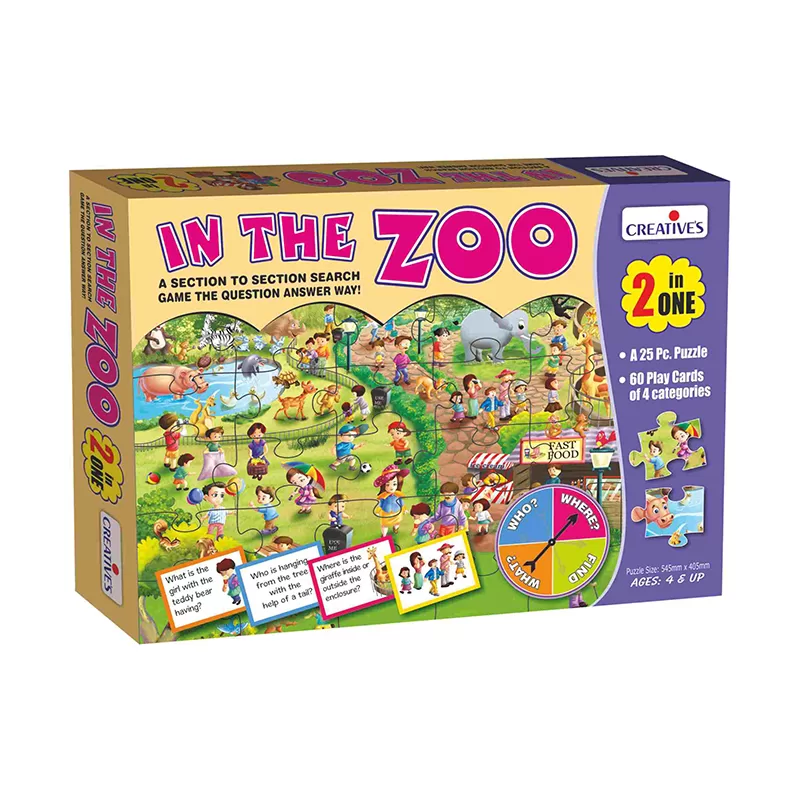
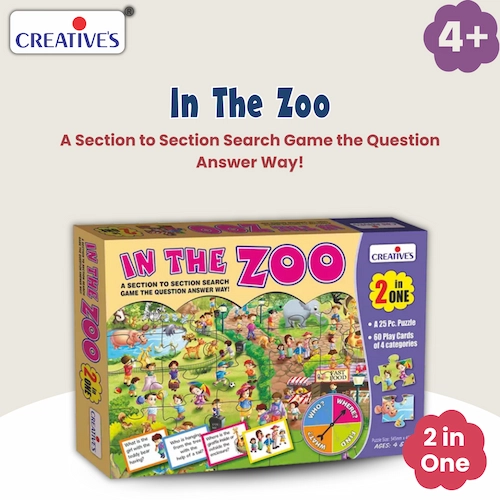
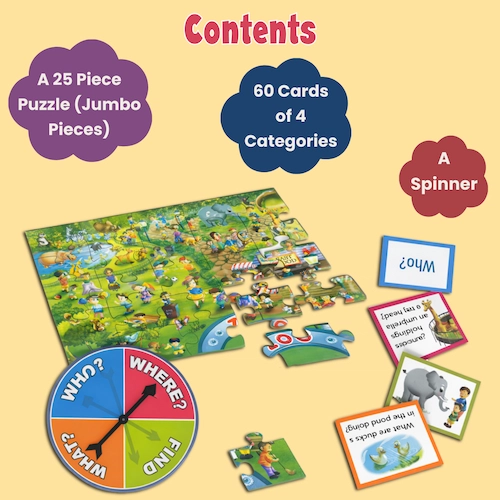
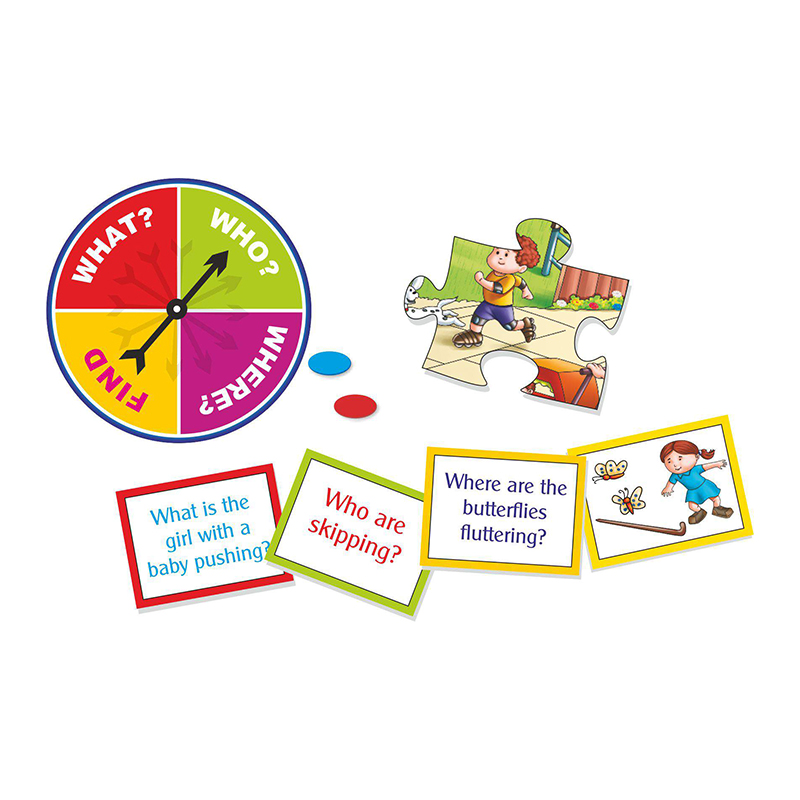
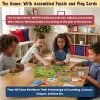
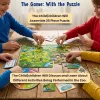
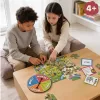
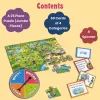
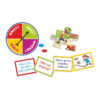
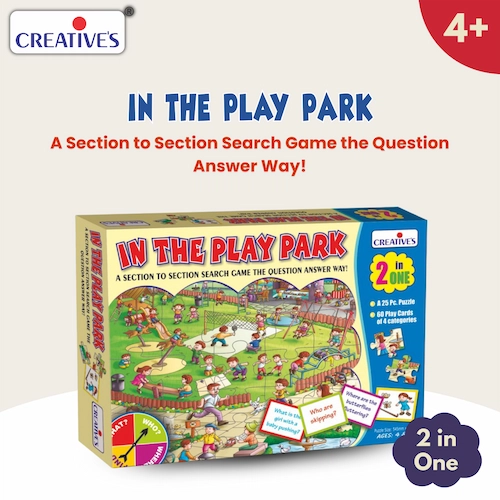
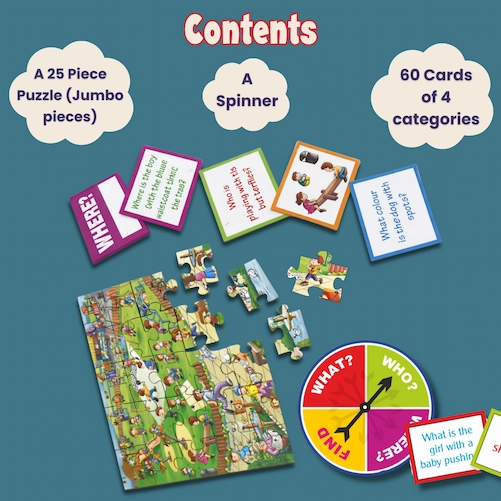
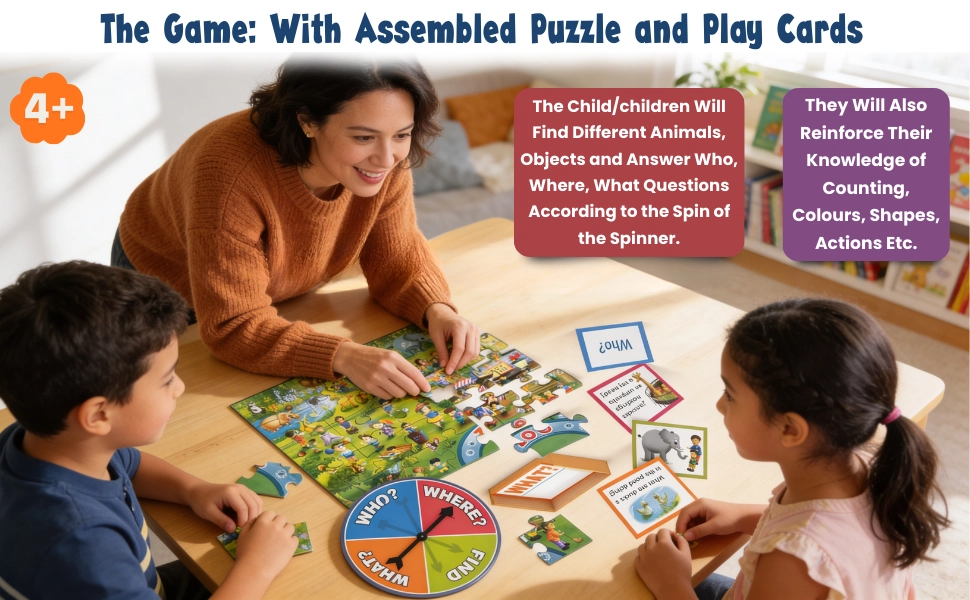
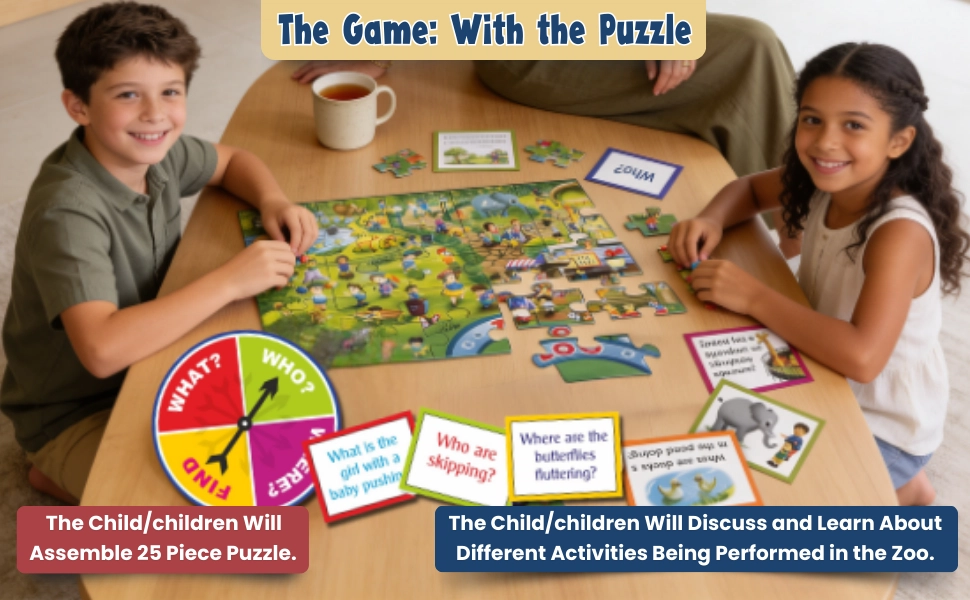
Creative’s In the Zoo is a 2-in-1 zoo-themed puzzle and search card game for ages 4 and up, combining a 25-piece jumbo jigsaw with 60 question-and-answer play cards across four categories WHO, WHERE, WHAT and FIND triggered by a spinner. Used at home, in preschool classrooms and group learning settings, it builds observation, vocabulary, visual discrimination and logical thinking through an engaging zoo scene children assemble and then explore.
About This Product
ZOO PUZZLE SEARCH GAME 2-IN-1 AGES 4
25-piece jumbo jigsaw assembles a vivid zoo scene that becomes the game board for 60 Q&A play cards
WHO WHERE WHAT FIND SPINNER CARD GAME
Spinner selects one of four question categories per turn, keeping every round different and unpredictable
SCREEN-FREE OBSERVATION VOCABULARY GAME
Builds zoo vocabulary, visual scanning, colours, shapes, counting and sense of logic entirely through play
HOME CLASSROOM ZOO LEARNING ACTIVITY
Large 545mm x 405mm puzzle suits group play at a classroom table or family game time at home
QUALITY, SAFETY & TRUST :
Creative’s products are proudly made in India, conforming to BIS Safety Standards (IS 9873 – Part 1) with ISI Mark, and EN71 Part 1, 2 & 3 with CE Mark European Toy Safety Standards — trusted by parents and educators since 1987.
Creative's In the Zoo combines a 25-piece jumbo jigsaw with a section
to-section search card game in one box — giving children ages 4 and up
two completely different ways to engage with the same richly illustrated
zoo scene. At 545mm x 405mm, the completed puzzle is large enough for
a group to gather around and explore together.
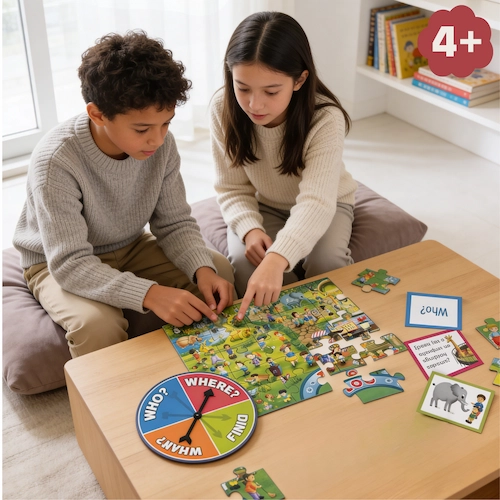
After assembling the puzzle, players spin the spinner to land on one of
four question categories WHO, WHERE, WHAT or FIND then draw
a card and answer by searching the scene. Questions range from simple
spotting ('Find the monkey') to reasoning and description
('Who is hanging from the tree with the help of a tail?'), naturally
stretching vocabulary and observation skills.
Parents choose it because assembly and the game can run as two
separate sessions or one long one. Teachers use it for early language
sessions, group observation activities and classroom vocabulary building
a zoo trip without leaving the room.
HOW CHILDREN LEARN
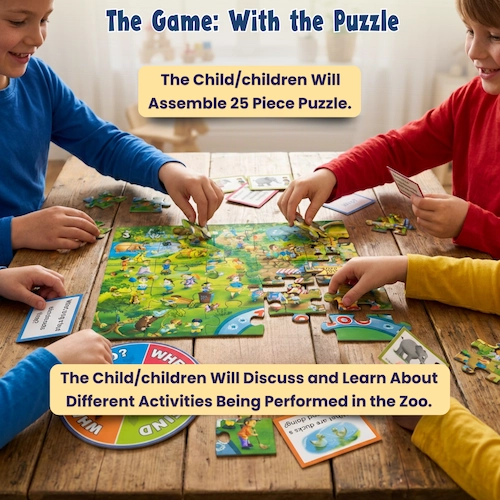
Children first assemble the 25-piece jumbo puzzle together,
discussing the zoo scene as it takes shape — identifying animals,
spotting people and naming the activities happening in each section.
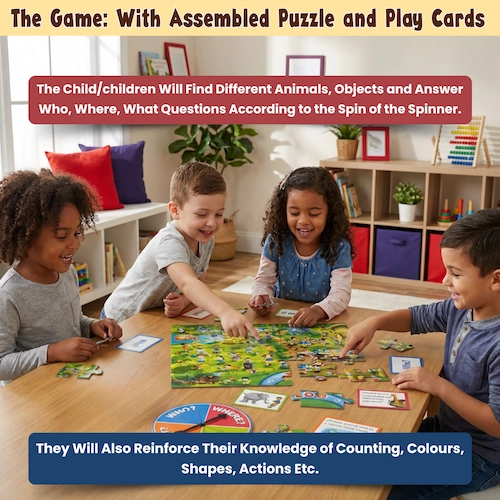
Once the puzzle is complete, the spinner is used: landing on
WHERE prompts a card like 'Where is the giraffe — inside or
outside the enclosure?' — requiring careful visual scanning of
the assembled scene.
WHO questions ('Who is hanging from the tree with the help
of a tail?') challenge children to identify specific characters by
action and detail, building observation skills and descriptive
language together.
WHAT and FIND categories reinforce counting, colours, shapes
and actions — 'What are the ducks in the pond doing?' naturally
extends into number and action vocabulary without formal
instruction.
Playing in a group encourages children to look carefully, reason
aloud and agree on answers — building logical thinking,
turn-taking and confident verbal expression across every
game session.
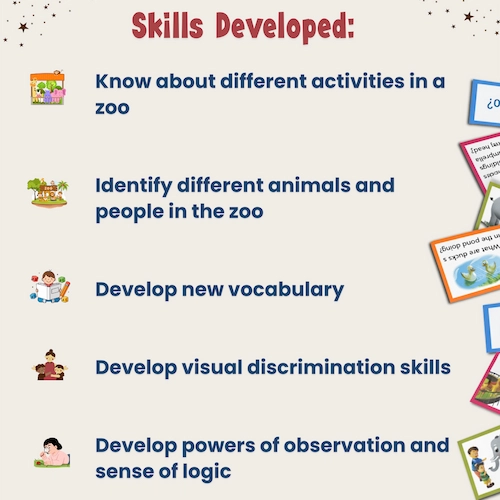
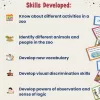
SKILLS DEVELOPED
Visual Discrimination & Observation
Zoo & Animal Awareness / Vocabulary
Language Development & Descriptive Language
Logical Thinking & Sense of Logic
Counting, Colours & Shapes (Early Math)
Fine Motor Skills (Puzzle Assembly)
Focus, Attention & Turn-Taking
WHO IS IT FOR
Children ages 4–8 who enjoy jigsaw puzzles and want a game
that continues after the puzzle is built.
Parents looking for a screen-free activity that combines puzzle-building
and question-and-answer play in one box.
Preschool and early primary teachers running zoo, animal
or observation-based language sessions who need a ready-to-use
group activity.
Homeschooling families covering vocabulary, observation and
early science who want a richly visual, reusable resource.
Learning support educators who use visual scene activities and
guided question formats in structured play and therapy-friendly
learning settings.
After-school programme leaders looking for a group activity
that blends puzzle-building with language and observation skills.
PRODUCT FEATURES TABLE
Age Group: 4 Years & Up Players: 1 or more (group play recommended) Play Type: Jigsaw Puzzle + Spinner-Based Search Card Game — 2-in-1 Educational Category: Observation • Vocabulary • Early Science
• Language Development Puzzle Size: 545 mm × 405 mm — 25 Jumbo Pieces Contents: 25-Piece Jumbo Puzzle • 60 Play Cards
(4 categories: WHO / WHERE / WHAT / FIND) • 1 Spinner Safety Certifications: BIS IS 9873 (Part 1) • CE Marked • EN71 Compliant
Creative’s In the Zoo combines a 25-piece jumbo jigsaw with a section
to-section search card game in one box — giving children ages 4 and up
two completely different ways to engage with the same richly illustrated
zoo scene. At 545mm x 405mm, the completed puzzle is large enough for
a group to gather around and explore together.
After assembling the puzzle, players spin the spinner to land on one of
four question categories WHO, WHERE, WHAT or FIND then draw
a card and answer by searching the scene. Questions range from simple
spotting (‘Find the monkey’) to reasoning and description
(‘Who is hanging from the tree with the help of a tail?’), naturally
stretching vocabulary and observation skills.
Parents choose it because assembly and the game can run as two
separate sessions or one long one. Teachers use it for early language
sessions, group observation activities and classroom vocabulary building
a zoo trip without leaving the room.
HOW CHILDREN LEARN
Children first assemble the 25-piece jumbo puzzle together,
discussing the zoo scene as it takes shape — identifying animals,
spotting people and naming the activities happening in each section.
Once the puzzle is complete, the spinner is used: landing on
WHERE prompts a card like ‘Where is the giraffe — inside or
outside the enclosure?’ — requiring careful visual scanning of
the assembled scene.
WHO questions (‘Who is hanging from the tree with the help
of a tail?’) challenge children to identify specific characters by
action and detail, building observation skills and descriptive
language together.
WHAT and FIND categories reinforce counting, colours, shapes
and actions — ‘What are the ducks in the pond doing?’ naturally
extends into number and action vocabulary without formal
instruction.
Playing in a group encourages children to look carefully, reason
aloud and agree on answers — building logical thinking,
turn-taking and confident verbal expression across every
game session.
SKILLS DEVELOPED
Visual Discrimination & Observation
Zoo & Animal Awareness / Vocabulary
Language Development & Descriptive Language
Logical Thinking & Sense of Logic
Counting, Colours & Shapes (Early Math)
Fine Motor Skills (Puzzle Assembly)
Focus, Attention & Turn-Taking
WHO IS IT FOR
Children ages 4–8 who enjoy jigsaw puzzles and want a game
that continues after the puzzle is built.
Parents looking for a screen-free activity that combines puzzle-building
and question-and-answer play in one box.
Preschool and early primary teachers running zoo, animal
or observation-based language sessions who need a ready-to-use
group activity.
Homeschooling families covering vocabulary, observation and
early science who want a richly visual, reusable resource.
Learning support educators who use visual scene activities and
guided question formats in structured play and therapy-friendly
learning settings.
After-school programme leaders looking for a group activity
that blends puzzle-building with language and observation skills.
PRODUCT FEATURES TABLE
Age Group: 4 Years & Up Players: 1 or more (group play recommended) Play Type: Jigsaw Puzzle + Spinner-Based Search Card Game — 2-in-1 Educational Category: Observation • Vocabulary • Early Science
• Language Development Puzzle Size: 545 mm × 405 mm — 25 Jumbo Pieces Contents: 25-Piece Jumbo Puzzle • 60 Play Cards
(4 categories: WHO / WHERE / WHAT / FIND) • 1 Spinner Safety Certifications: BIS IS 9873 (Part 1) • CE Marked • EN71 Compliant