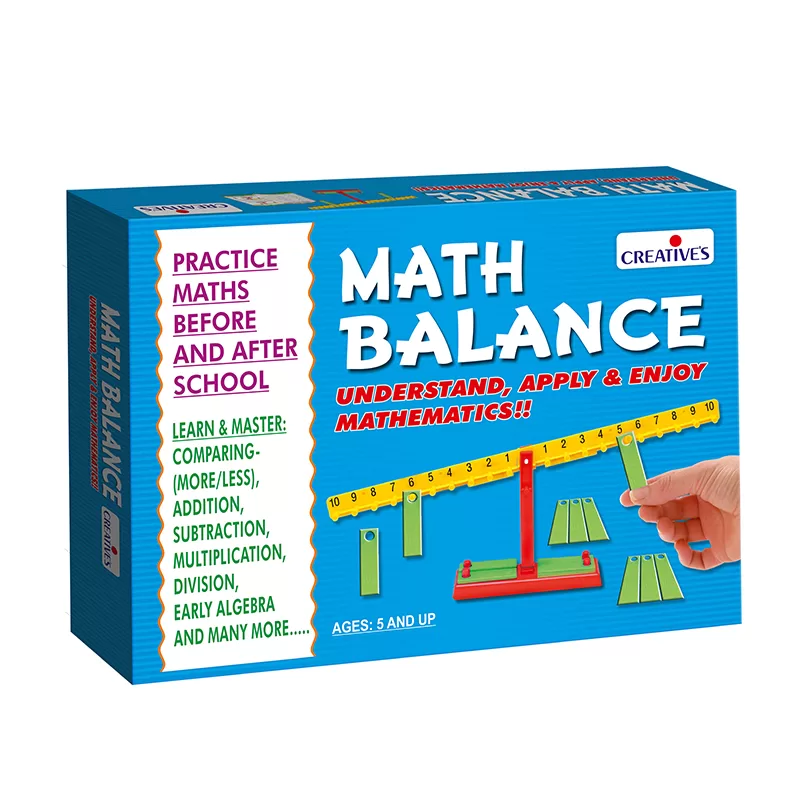
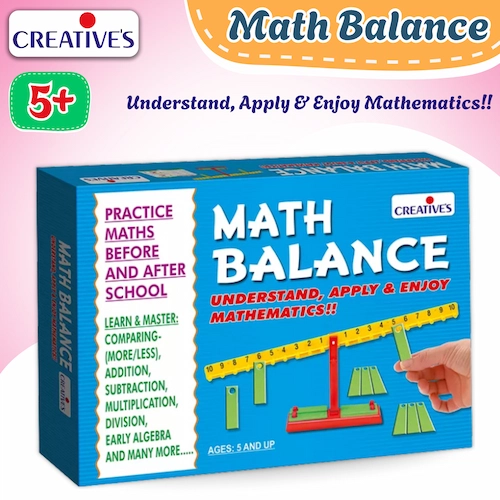
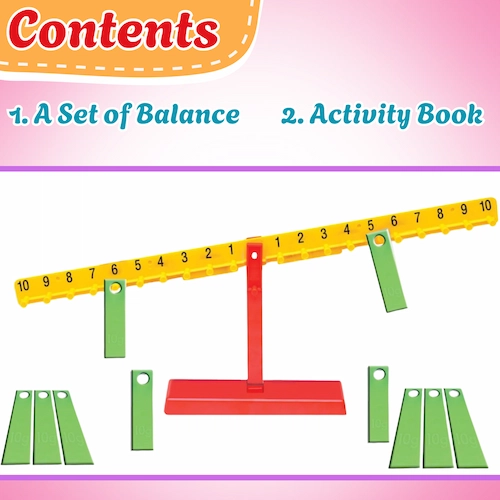
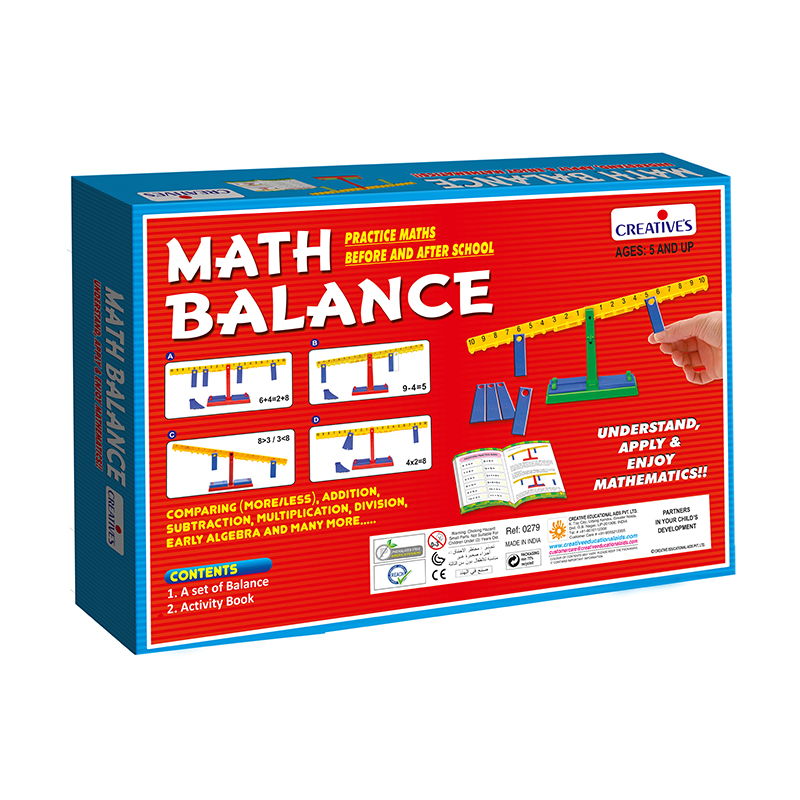
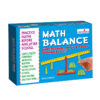
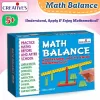
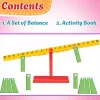
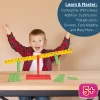
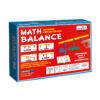
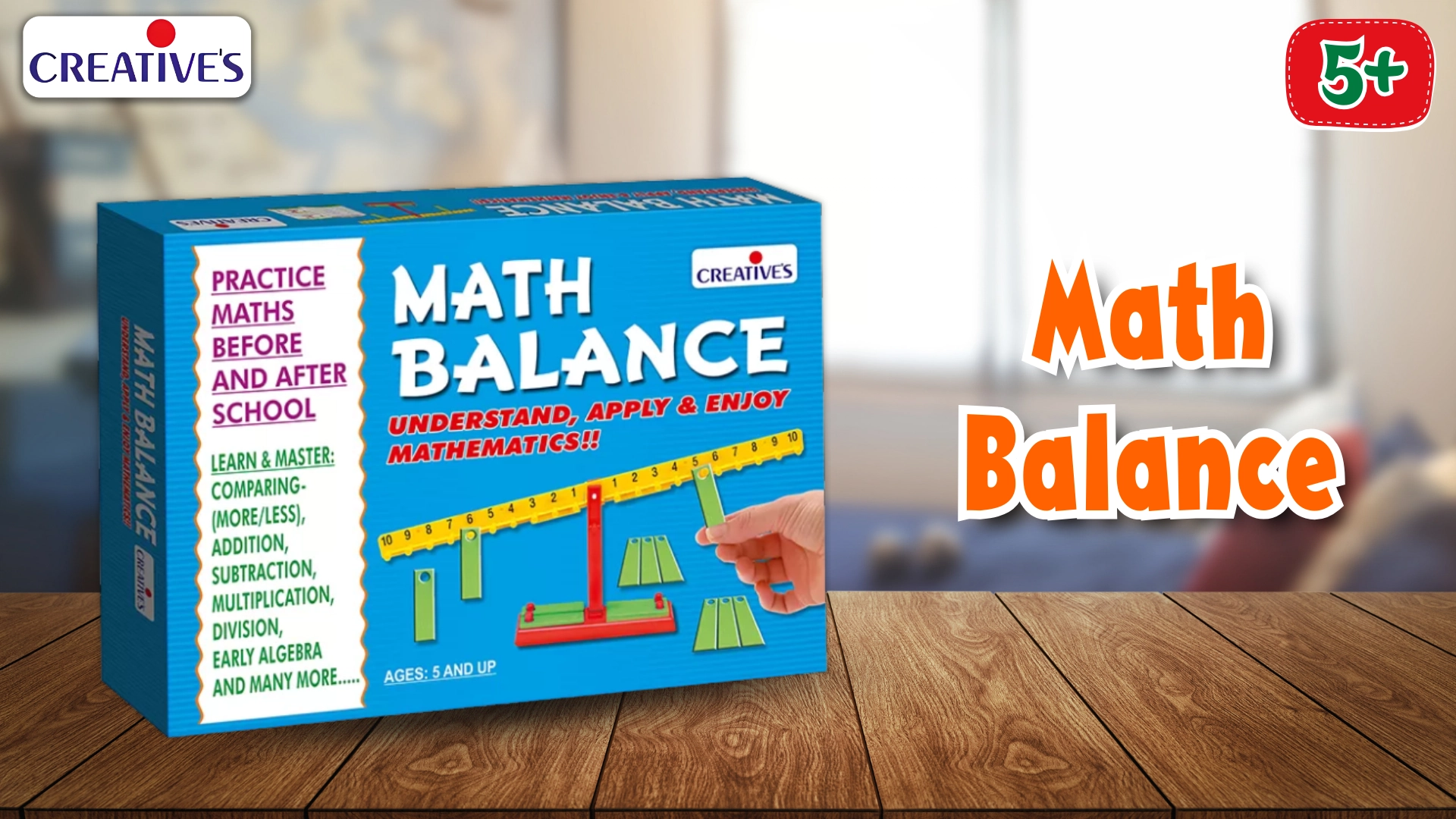
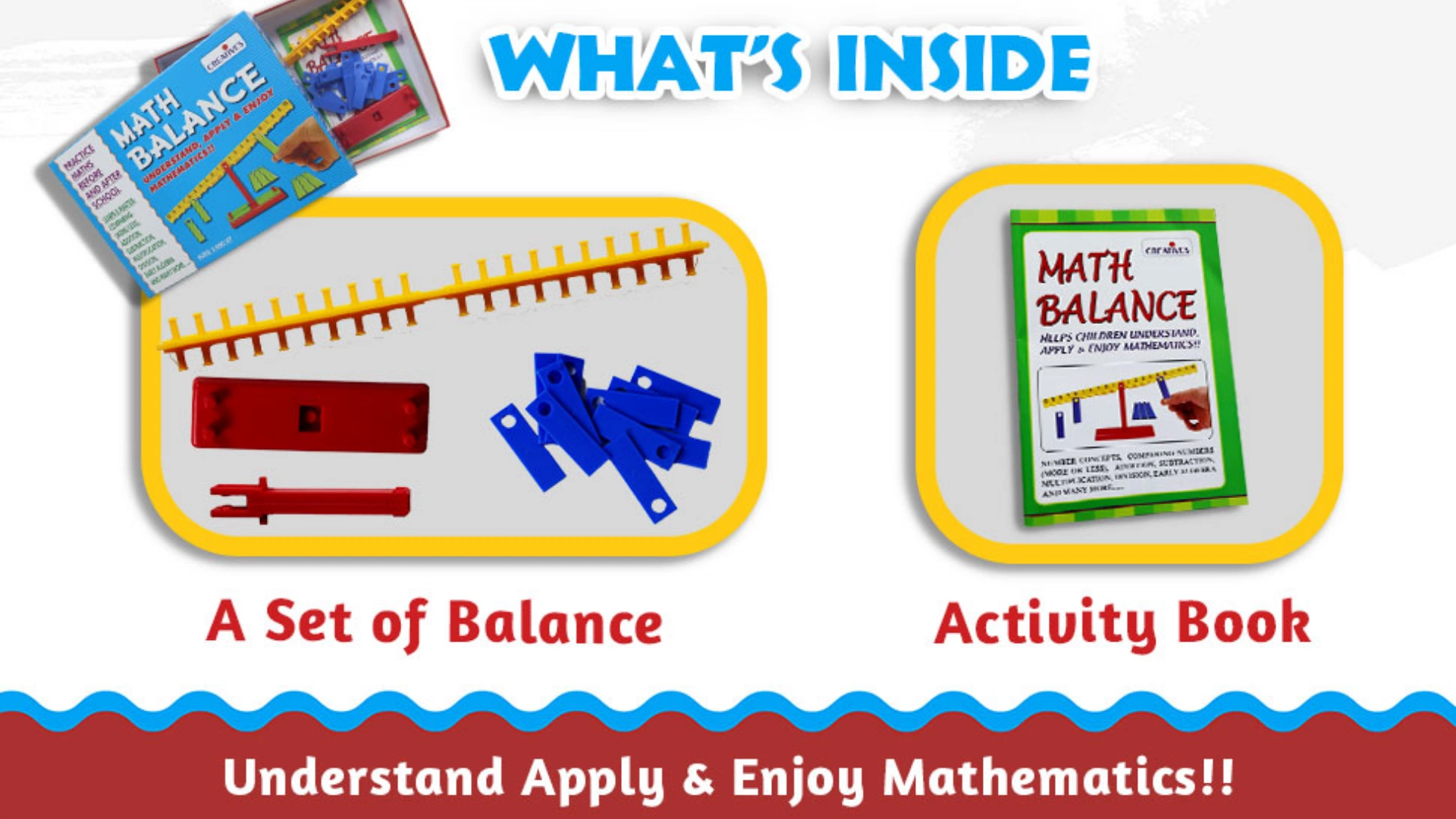
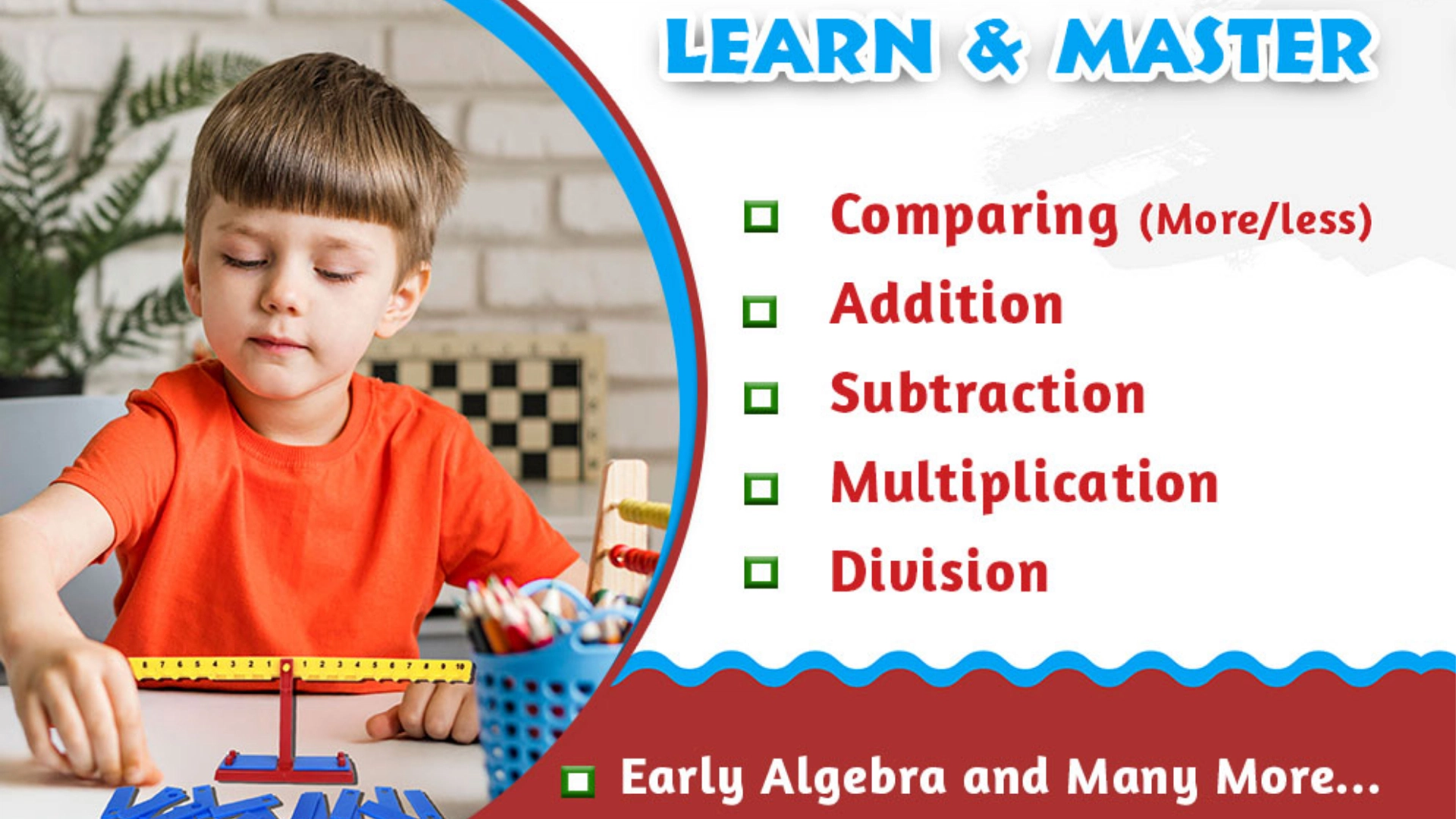
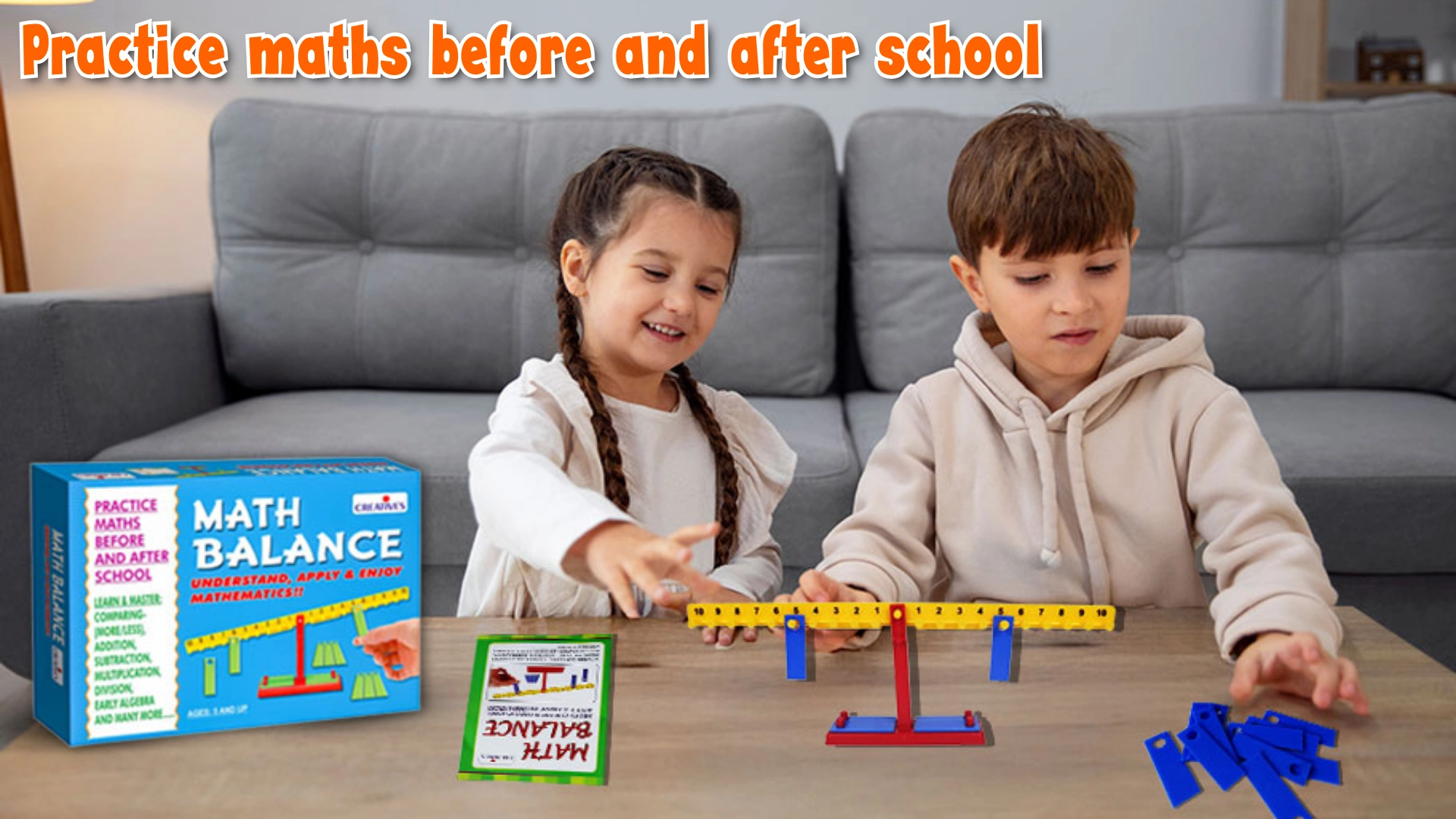
Creative’s Math Balance is a physical balance beam that makes equations real — children place weight tiles to balance both sides, mastering addition, subtraction, multiplication, division, comparing, and early algebra concepts from age 5. Used at home, in primary classrooms, and as a before-and-after-school maths practice tool.
About This Product
MATH BALANCE BEAM EQUATION EQUIVALENCE EARLY ALGEBRA AGES 5 — Hang weight tiles on the numbered beam to physically balance equations — 6+4=2+8 levels the beam, making the concept of equality and early algebra tangible rather than abstract.
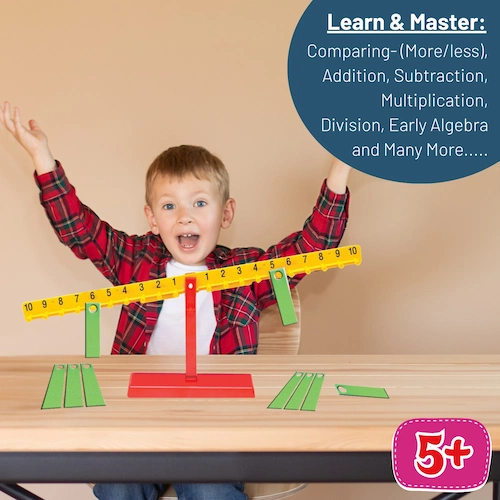
ADDITION SUBTRACTION MULTIPLICATION DIVISION COMPARING ACTIVITY — One balance covers six maths skill areas: comparing (more/less), addition, subtraction, multiplication, division, and early algebra — structured exercises progress through all levels in the Activity Book.
SCREEN-FREE HANDS-ON MATHS PRACTICE BEFORE AFTER SCHOOL — No batteries or screens — children physically hang tiles and watch the beam tilt or level, building number sense and arithmetic understanding through active manipulation rather than passive worksheet completion.
HOME & CLASSROOM MATHS MANIPULATIVE PROBLEM SOLVING TOOL — Supports hands-on learning across home and primary classroom environments; Activity Book provides structured progressive exercises for independent practice or guided teacher-led sessions.
QUALITY, SAFETY & TRUST — Creative’s products are proudly made in India, conforming to BIS Safety Standards (IS 9873 – Part 1) and EN71 Part 1, 2 & 3 with European Toy Safety Standards trusted by parents and educators since 1987.
Creative’s Math Balance is a physical balance beam maths manipulative
for children aged 5 and up. By hanging numbered weight tiles on a
calibrated beam, children explore six arithmetic concepts comparing,
addition, subtraction, multiplication, division, and early algebra and
discover that equations must balance on both sides of the equals sign.
Children start with simple comparisons: hang a tile at 8 and one at 3,
and the beam shows which is greater. Then they build equations: 6+4
on the left must be matched by 2+8 on the right for the beam to level.
The Activity Book guides them through progressively harder challenges,
from single operations to multi-step equations.
Parents choose this balance because it answers the question “why does
equals mean equal?” in a way that makes the concept stick.
Teachers value it because the concrete equation-balancing experience is
exactly what early algebra understanding requires and it works just as
well at home before school as it does in a classroom.
HOW CHILDREN LEARN
A child hangs a tile at position 6 and another at position 4 on the
left side, then must find which tiles balance the right discovering
that 2 and 8 work is the moment they understand what the equals
sign actually means.
When the beam tips rather than levels, the child knows their answer
is wrong before any adult says so — that immediate, physical feedback i
s far more memorable than a red mark on a worksheet.
Building 9−4=5 on the balance — 9 on the left, 4 on the left removed,
5 on the right makes subtraction a physical, reversible action rather
than an abstract rule to memorise.
Placing 4 at position 2 to represent 4×2=8, then checking by placing
8 alone on the right, introduces the concept of multiplication as repeated
addition through physical verification.
Comparing 8 and 3 by hanging tiles and watching which side dips lower
builds an intuitive, physical understanding of inequality before any
symbol notation is introduced.
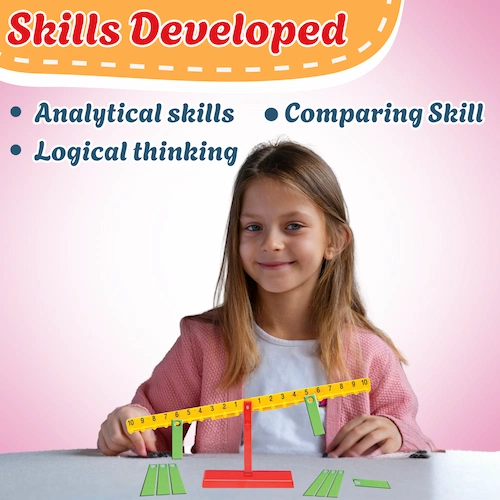
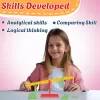
SKILLS DEVELOPED
Number Sense & Arithmetic Operations
Equation Equivalence & Early Algebra
Problem Solving & Logical Thinking
Comparing Numbers (More, Less, Equal)
Cognitive Development
Fine Motor Skills
Focus and Attention
WHO IS IT FOR
Children aged 5 to 10 who are learning arithmetic and need to
experience number relationships physically before they can
understand them abstractly.
Parents who want a maths tool their child can use independently
before and after school to practise and reinforce what is being taught
in class.
Primary school teachers who need a maths manipulative for arithmetic
and early algebra sessions that makes the concept of equation equivalence
immediately visible.
Homeschooling parents covering addition, subtraction, multiplication,
division, comparing, and early algebra through a single structured
hands-on resource.
Maths tutors and learning support educators who use physical manipulatives
to bridge the gap between concrete number experience and abstract
symbolic notation.
Gift-givers looking for a curriculum-quality maths toy for a 5–10-year-old
that a teacher would use in class and a child will genuinely engage with at home.
PRODUCT FEATURES TABLE
Age Group: 5 Years and Up
Players: 1 or more (individual or guided)
Play Type: Physical Balance Beam Maths Manipulative