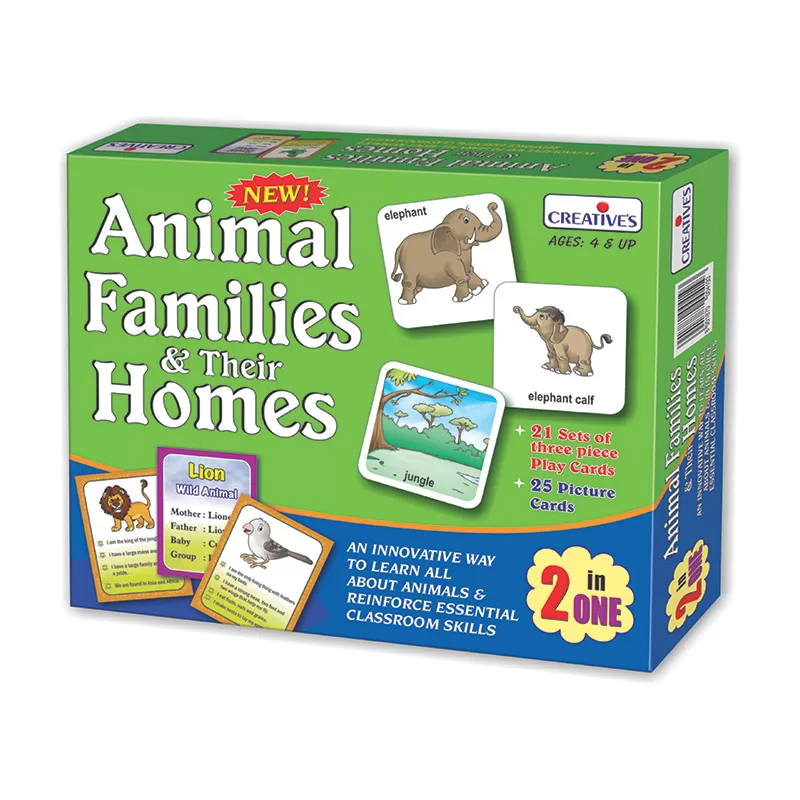
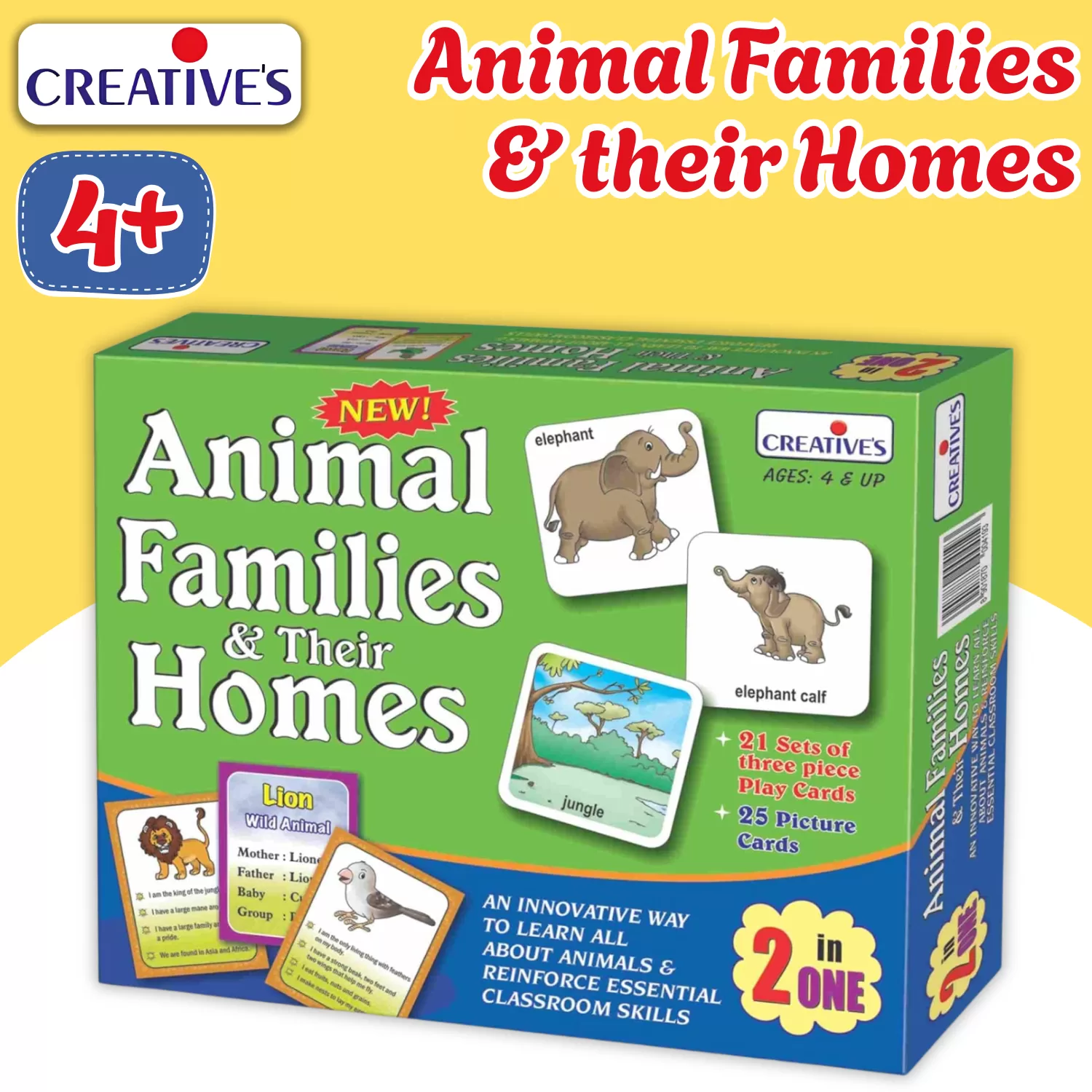
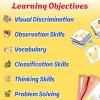
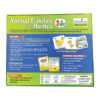
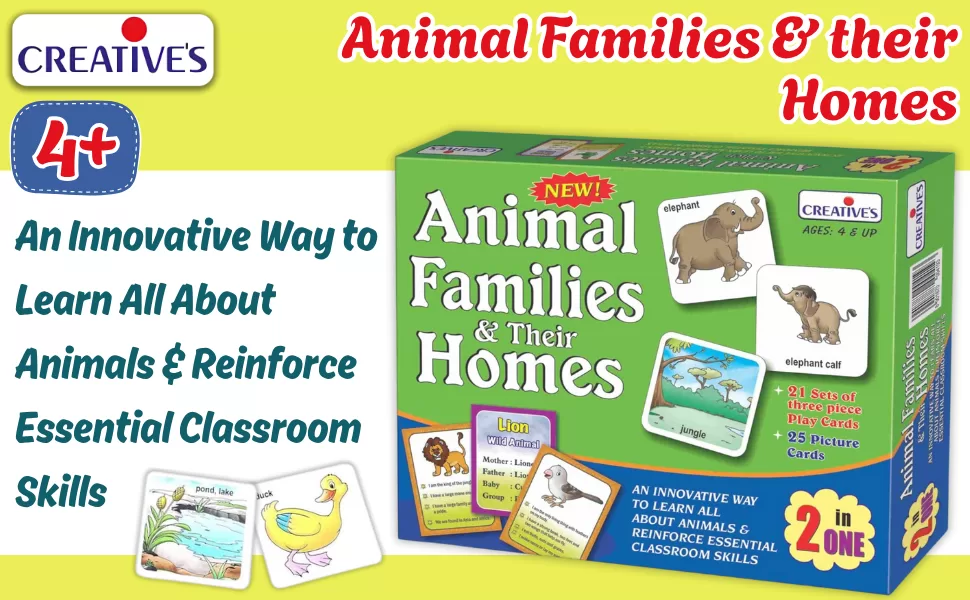
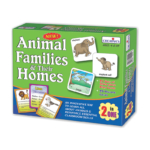
Creative’s Animal Families & Their Homes is a 2-in-1 card game for ages 4 and up that teaches children to match 21 domestic and wild animals to their babies and homes using 63 self-checking play cards and 25 double-sided picture cards. Used at home, in preschool classrooms and structured learning settings, it builds animal vocabulary, classification skills and visual discrimination through hands-on matching and quiz activities.
About This Product
ANIMAL FAMILIES MATCHING CARD GAME 2-IN-1
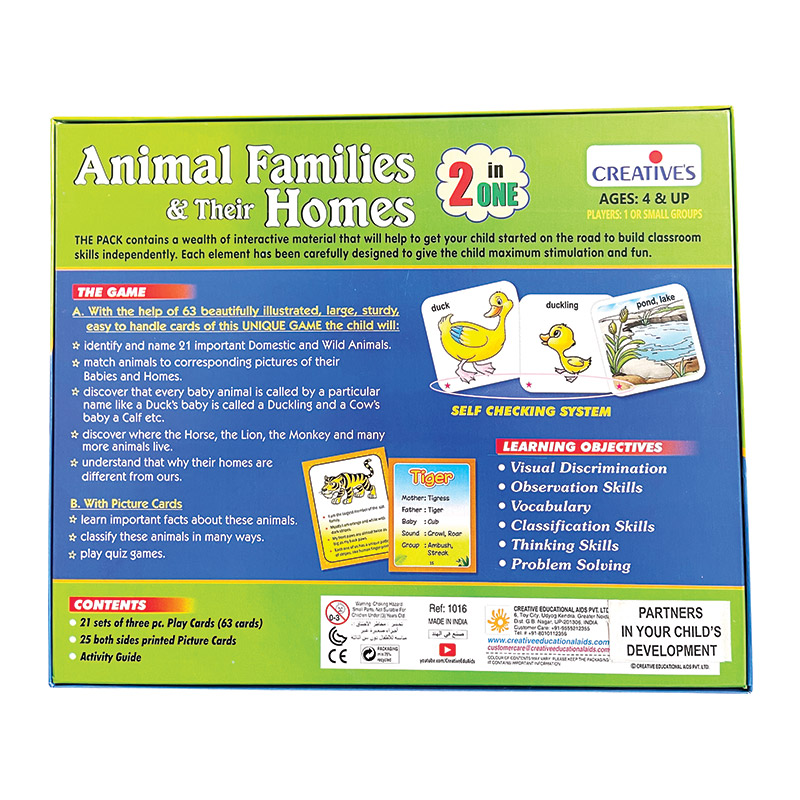
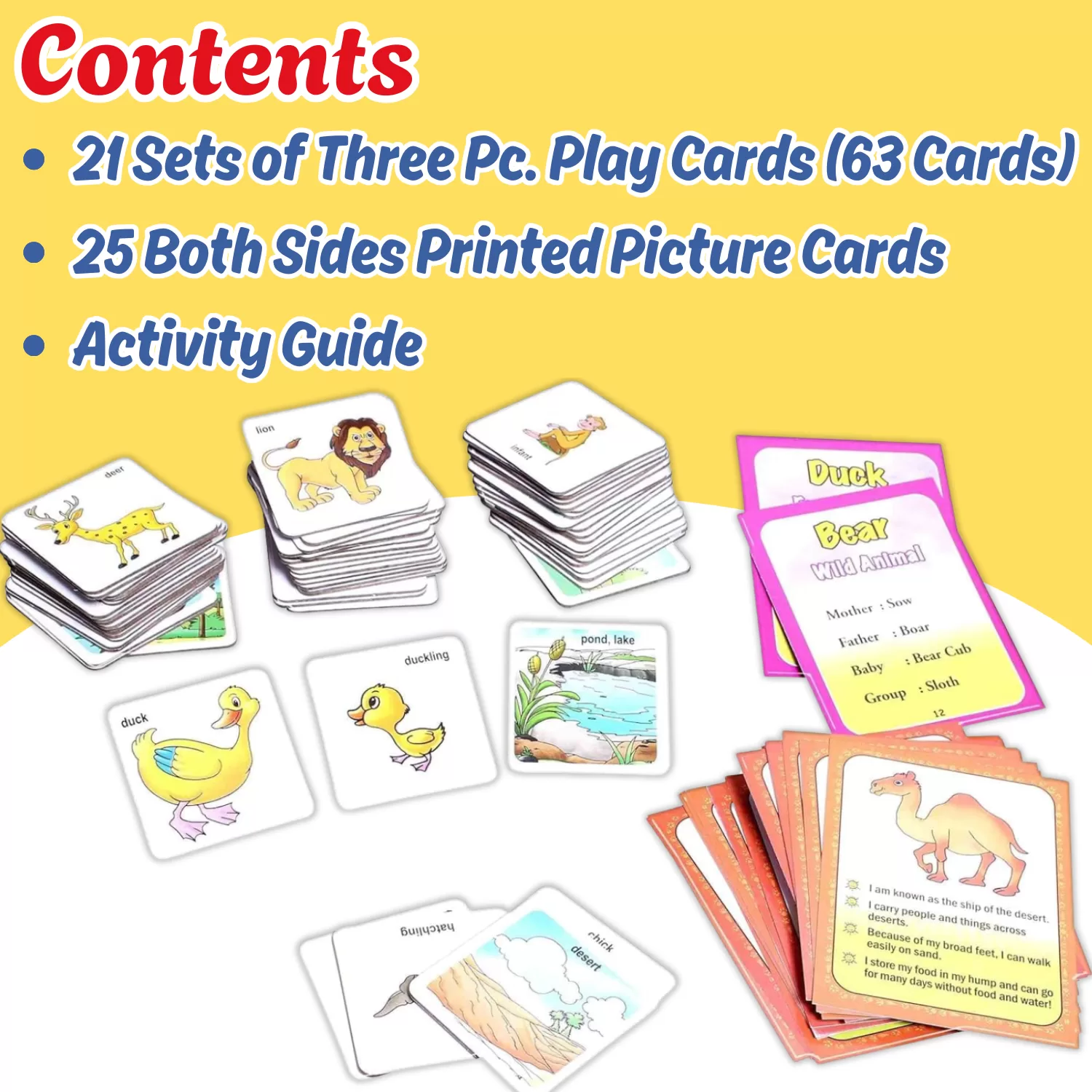
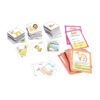
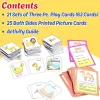
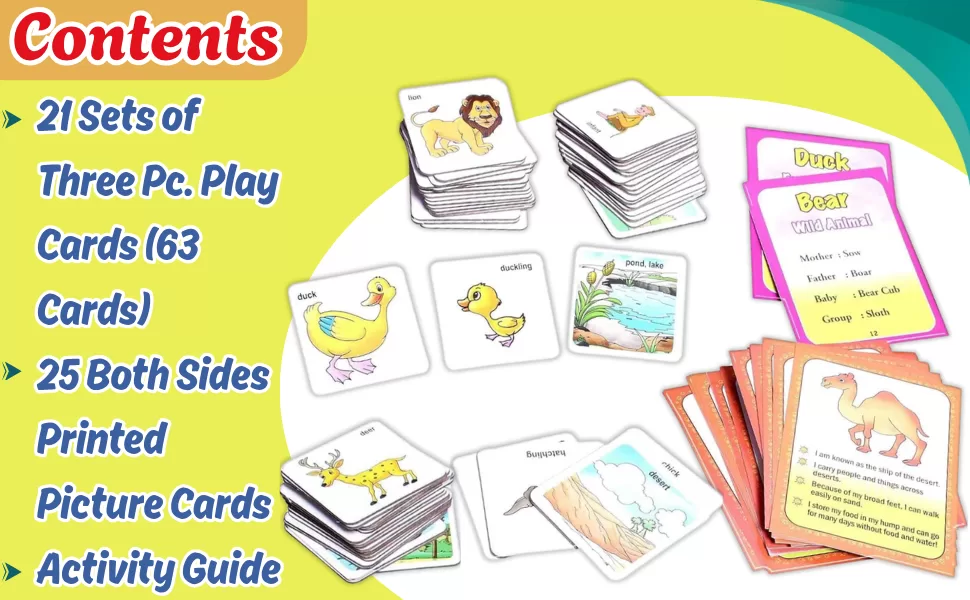
63 self-checking play cards in 21 three-piece sets match each animal to its baby name and home
ANIMAL BABY NAMES HOMES PICTURE CARDS
25 double-sided picture cards packed with animal facts — mother, father, baby, sound and group name
SCREEN-FREE ANIMAL CLASSIFICATION TOY AGES 4
Self-checking system lets children verify every match independently, building confidence without adult help
HOME CLASSROOM ANIMAL VOCABULARY GAME
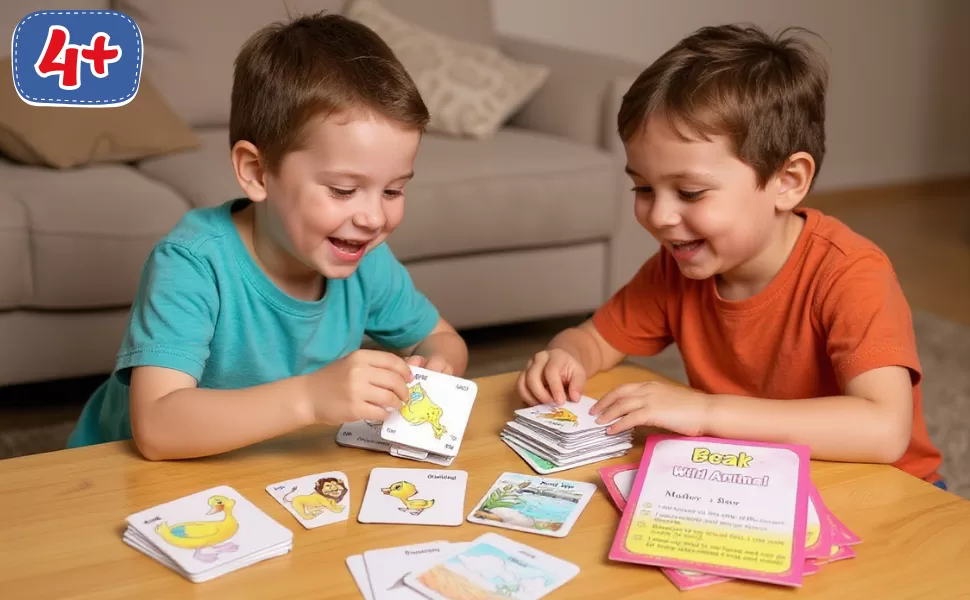
Matching, sorting and quiz formats work for solo play, small groups and early science classroom sessions
QUALITY, SAFETY & TRUST Creative’s products are proudly made in India, conforming to BIS Safety Standards (IS 9873 – Part 1) and EN71 Part 1, 2 & 3 with European Toy Safety Standards trusted by parents and educators since 1987.
Creative's Animal Families & Their Homes covers 21 domestic and
wild animals — from the elephant in the jungle to the duck at the pond
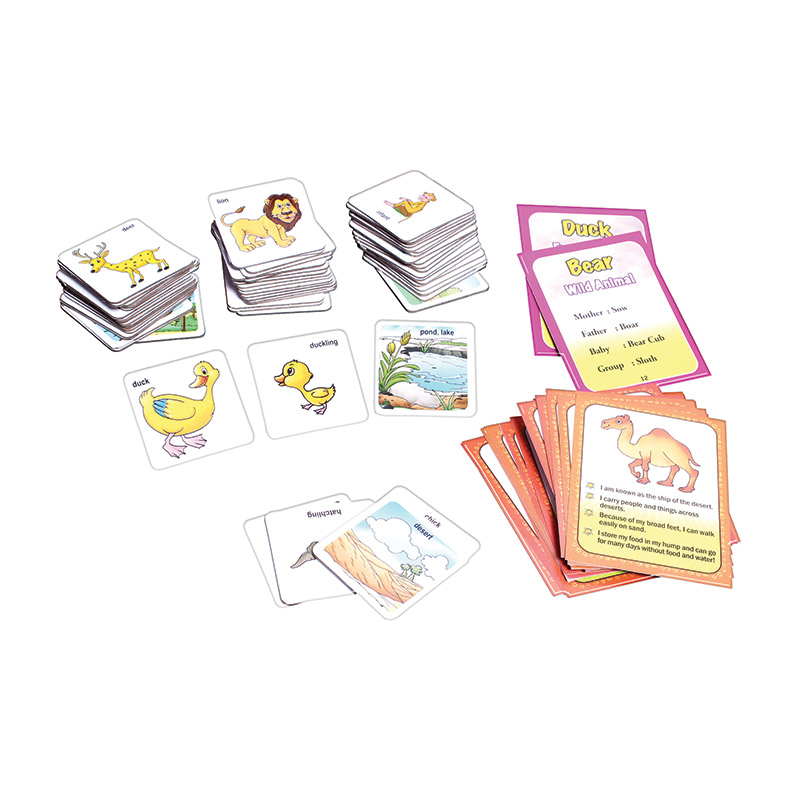
through 63 large illustrated play cards arranged in three-piece sets.
Each set contains the animal, its baby and its home, and every card
carries a self-checking marking so children can confirm their own
matches without waiting for an adult.
Children sort the 63 cards into matched sets, then turn to the 25 double
sided picture cards to learn deeper facts: each card carries the animal's
mother and father names, baby name, sound, group name and interesting
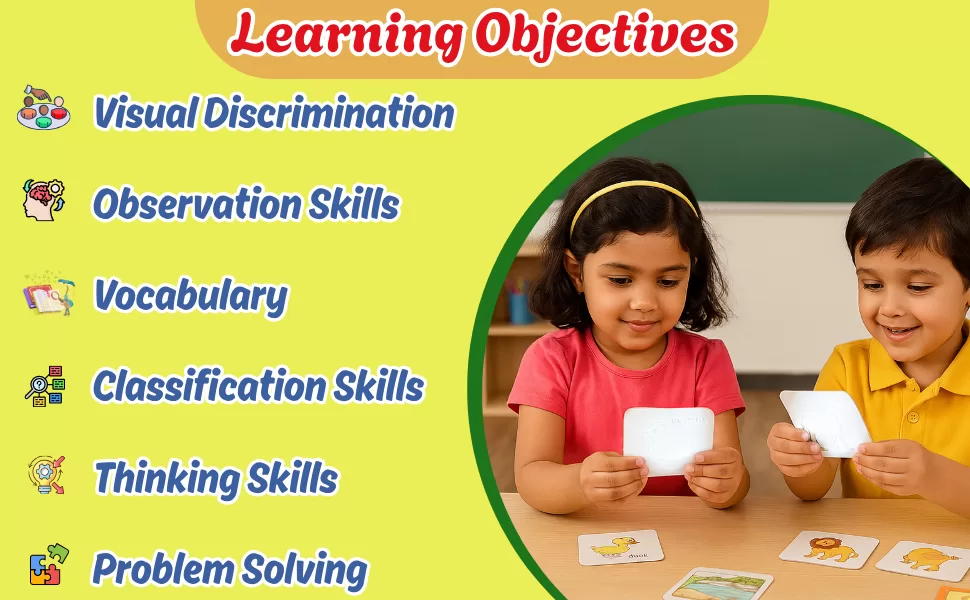
real-world facts. Matching then becomes quiz sorting, classifying, and
testing knowledge in the same session.
Teachers reach for it because it covers three learning activities in one box
matching, classification and quiz without preparation. Parents choose
it because children work through it independently, returning to it again
and again as confidence grows.
HOW CHILDREN LEARN
A child picks up the Elephant card and searches for its matching
baby (Calf) and home (Jungle) connecting three distinct facts
about the same animal through physical card matching rather
than memorisation.
The self-checking system on each card lets children verify their own
matches without needing an adult to confirm, building independent
thinking and a genuine sense of self-correction.
Picture cards prompt deeper thinking 'Is a lion a domestic or wild
animal? Where do lions live? What is a group of lions called?' moving
children from matching into active classification and discussion.
Discovering that a duck's baby is called a Duckling and a cow's baby a
Calf teaches children that language has patterns a meaningful building
block for early literacy and science vocabulary.
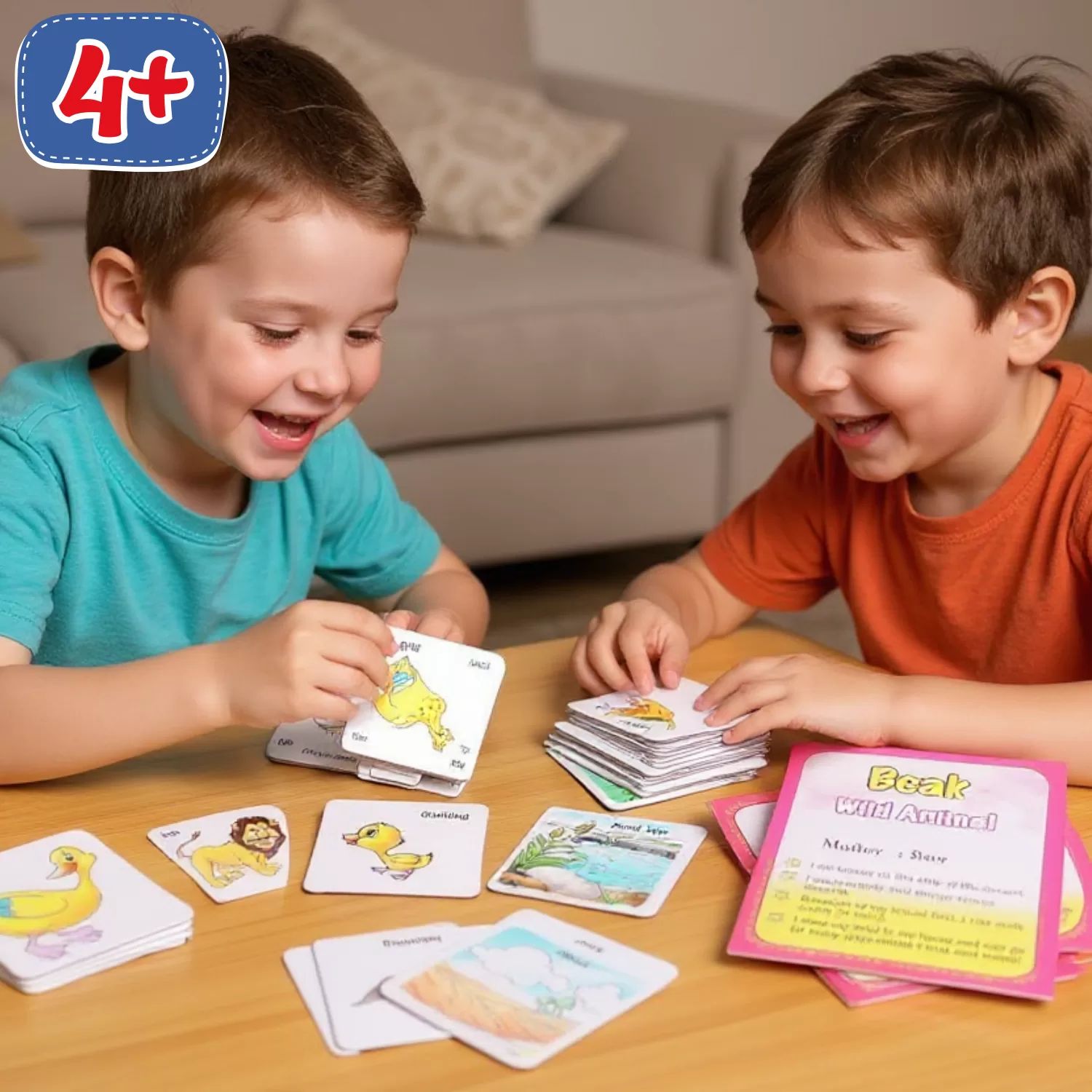
Playing in a small group encourages children to share facts, question
each other's matches and explain their reasoning building spoken
language and confident verbal expression alongside animal knowledge.
Children ages 4–7 learning to match domestic and wild
animals to their baby names and natural homes.
Parents looking for a hands-on animal activity that children
can use independently with the self-checking card system.
Preschool and kindergarten teachers running early science
or 'Animals' units who need a compact matching and quiz
activity for solo or small-group work.
Homeschooling families covering early science vocabulary
who want a reusable, self-correcting card activity for animal
families and habitats.
Learning support educators using visual matching and
classification tasks in structured play and therapy-friendly
learning settings.
After-school learning groups looking for a rich, repeatable
animal activity that builds vocabulary and classification skills together.
PRODUCT FEATURES TABLE
Age Group:
4 Years & Up Players:
1 or Small Groups Play Type:
Self-checking Matching • Classification • Quiz — 2-in-1 Educational Category:
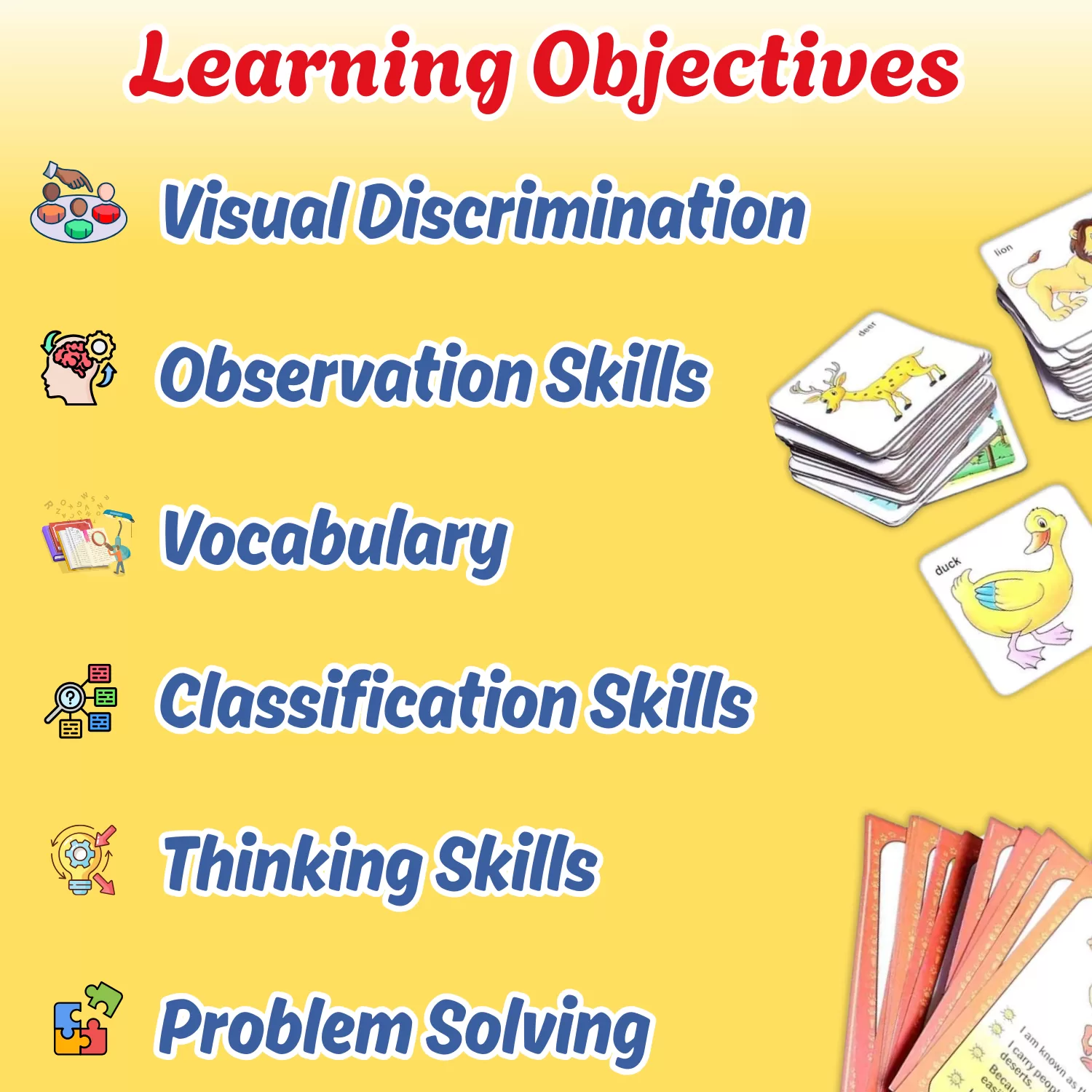
Early Science • Animal Awareness • Language Development Contents: 21 Sets of 3-Piece Play Cards (63 Cards) • 25 Double-Sided Picture Cards
• Activity Guide Safety Certifications:
BIS IS 9873 (Part 1) • CE Marked • EN71 Compliant
Creative’s Animal Families & Their Homes covers 21 domestic and
wild animals — from the elephant in the jungle to the duck at the pond
through 63 large illustrated play cards arranged in three-piece sets.
Each set contains the animal, its baby and its home, and every card
carries a self-checking marking so children can confirm their own
matches without waiting for an adult.
Children sort the 63 cards into matched sets, then turn to the 25 double
sided picture cards to learn deeper facts: each card carries the animal’s
mother and father names, baby name, sound, group name and interesting
real-world facts. Matching then becomes quiz sorting, classifying, and
testing knowledge in the same session.
Teachers reach for it because it covers three learning activities in one box
matching, classification and quiz without preparation. Parents choose
it because children work through it independently, returning to it again
and again as confidence grows.
HOW CHILDREN LEARN
A child picks up the Elephant card and searches for its matching
baby (Calf) and home (Jungle) connecting three distinct facts
about the same animal through physical card matching rather
than memorisation.
The self-checking system on each card lets children verify their own
matches without needing an adult to confirm, building independent
thinking and a genuine sense of self-correction.
Picture cards prompt deeper thinking ‘Is a lion a domestic or wild
animal? Where do lions live? What is a group of lions called?’ moving
children from matching into active classification and discussion.
Discovering that a duck’s baby is called a Duckling and a cow’s baby a
Calf teaches children that language has patterns a meaningful building
block for early literacy and science vocabulary.
Playing in a small group encourages children to share facts, question
each other’s matches and explain their reasoning building spoken
language and confident verbal expression alongside animal knowledge.
Children ages 4–7 learning to match domestic and wild
animals to their baby names and natural homes.
Parents looking for a hands-on animal activity that children
can use independently with the self-checking card system.
Preschool and kindergarten teachers running early science
or ‘Animals’ units who need a compact matching and quiz
activity for solo or small-group work.
Homeschooling families covering early science vocabulary
who want a reusable, self-correcting card activity for animal
families and habitats.
Learning support educators using visual matching and
classification tasks in structured play and therapy-friendly
learning settings.
After-school learning groups looking for a rich, repeatable
animal activity that builds vocabulary and classification skills together.
PRODUCT FEATURES TABLE
Age Group:
4 Years & Up Players:
1 or Small Groups Play Type:
Self-checking Matching • Classification • Quiz — 2-in-1 Educational Category:
Early Science • Animal Awareness • Language Development Contents: 21 Sets of 3-Piece Play Cards (63 Cards) • 25 Double-Sided Picture Cards
• Activity Guide Safety Certifications:
BIS IS 9873 (Part 1) • CE Marked • EN71 Compliant