Description
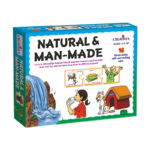
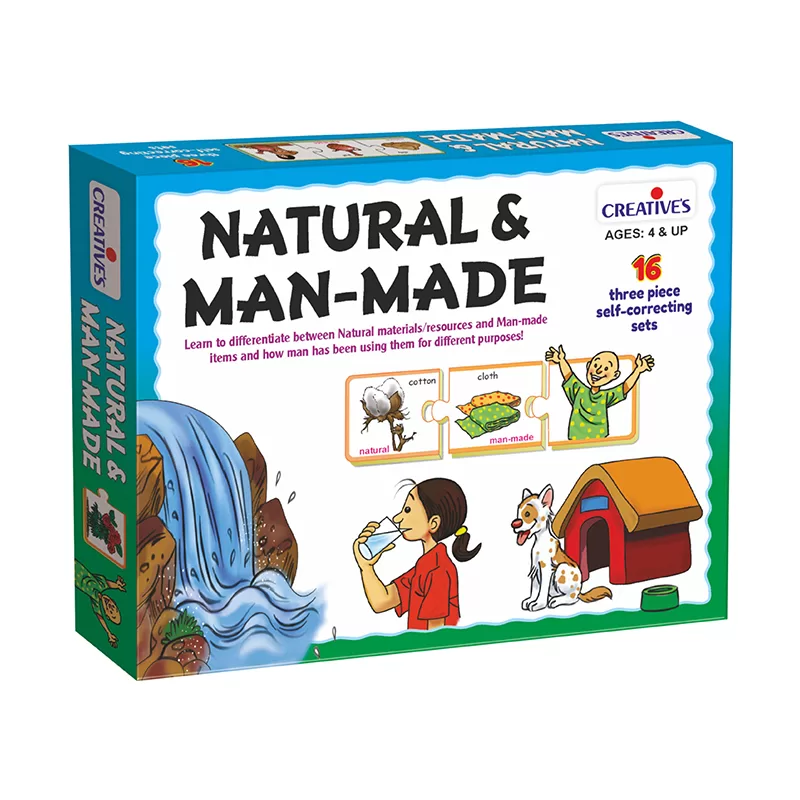
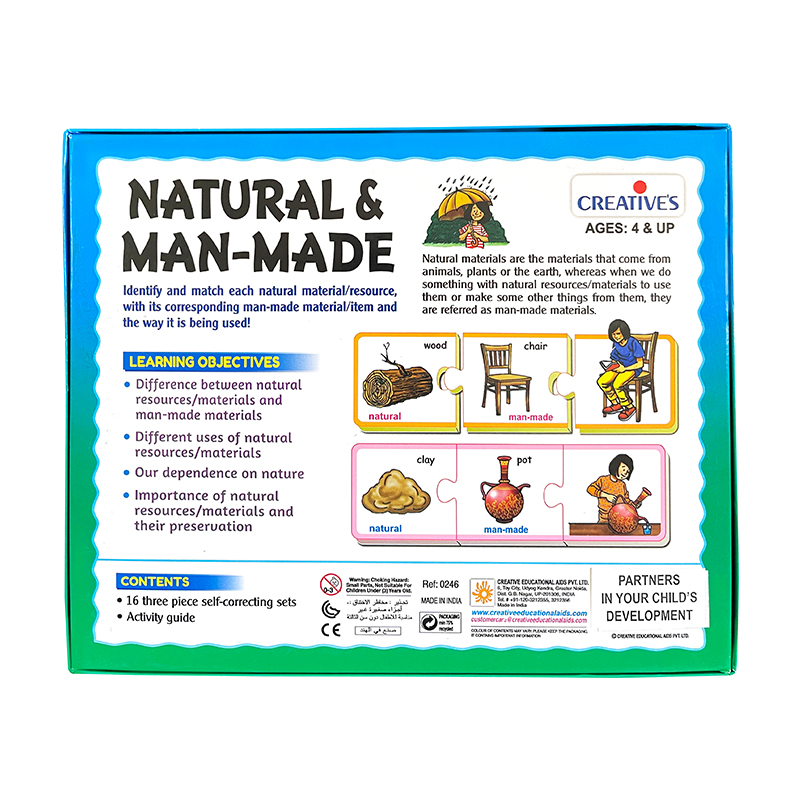
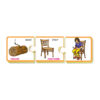
Creative’s Natural & Man-Made is a science puzzle activity for children
aged 4 and up. Sixteen three-piece self-correcting sets each tell the same
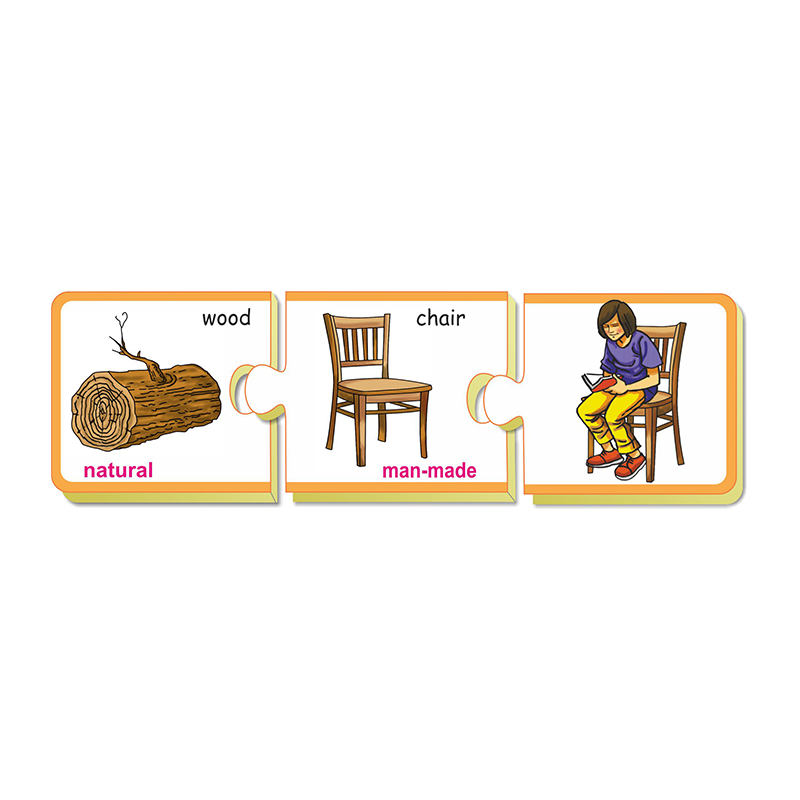
connected story: a natural resource, the man-made item created from it,
and the person using that item. Cotton becomes cloth becomes clothing.
Wood becomes a chair becomes a person sitting. Clay becomes a pot
becomes a potter at work. Because the puzzle pieces interlock and self
correct, children discover the right combination through reasoning rather
than guesswork.
Children work through each set, connecting the natural piece to its man-
made piece to the use piece — and the shaped edges mean a wrong
combination simply will not fit. The activity builds classification, cause-
and-effect reasoning, and environmental vocabulary across all 16 sets,
covering topics that link directly to early science and citizenship
curriculum themes.
Primary teachers use this set for natural resources and materials units.
Parents choose it because children leave the activity with a genuine question
‘where did the wood in our table come from?’ and that question is worth
more than any worksheet.
WHO IS IT FOR
- Children aged 4 and up beginning to understand the difference between
natural materials and man-made items through hands-on puzzle matching. - Parents looking for a science-linked, screen-free activity that builds
environmental vocabulary and curiosity about the natural world at home. - Primary school teachers running natural materials, resources, or
environmental science units for early years and Key Stage 1 groups. - Homeschooling families covering natural resources, sustainability,
or materials science as part of a science or citizenship curriculum. - Special educators who use three-piece interlocking puzzle formats in
structured and supported science and classification sessions. - After-school tutors and activity leaders who need a self-correcting,
self-directed activity children can complete without adult input every step.
HOW CHILDREN LEARN
- A child picks up the cotton card, looks at it, and tries to find the
cloth card that interlocks with it — then searches for the third piece
showing a person wearing the cloth, completing a chain from nature
to use in three connected steps. - When a piece does not fit, the self-correcting shape tells the child
immediately — no adult input needed. They try a different combination
until all three pieces connect, building problem-solving persistence. - Matching wood to chair to person sitting down triggers a genuine
- question: where does the wood in our furniture come from? The puzzle
sparks curiosity that extends well beyond the activity itself. - Working through all 16 sets — covering cotton, wood, clay and more
builds a vocabulary of natural resources and man-made materials that
directly supports early science, environmental, and citizenship
curriculum topics. - Discussing which materials are natural and which are man-made
after completing the sets introduces the concept of conservation
and our dependence on nature, a conversation that starts with t
hree interlocking puzzle pieces.
SKILLS DEVELOPED
Environmental Awareness
Scientific Thinking
Problem Solving
Visual Discrimination
Cause & Effect Reasoning
New Vocabulary
Independent Thinking
Classification